




 Home
Home
 National
 International
 Merit list
 Date Sheet
 Result
 Admission
 Study Abroad




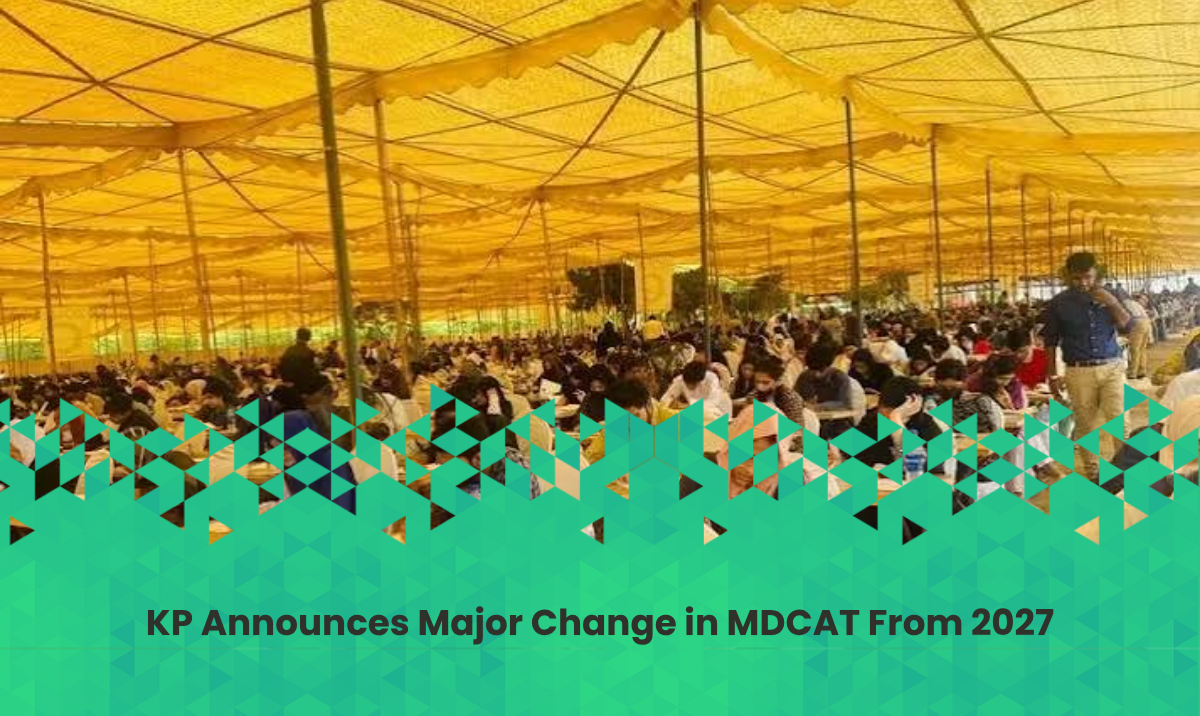
KP Announces Major Change in MDCAT From 2027: ETEA to Take Over Medical Admissions
The educational and medical landscape of Pakistan is set for a monumental shift. The Khyber Pakhtunkhwa (KP) provincial government has officially approved a landmark plan to conduct the Medical and Dental Colleges Admission Test (MDCAT) through the public sector Educational Testing and Evaluation Agency (ETEA) starting from the year 2027. This critical policy decision marks a departure from previous testing frameworks, handing over the reins of one of the country's most competitive professional entrance examinations to a trusted regional body.
Cabinet Approval Under Chief Minister Sohail Afridi
The high-stakes decision was finalized during a comprehensive provincial cabinet meeting held in Peshawar, chaired by Chief Minister Sohail Afridi. The meeting drew attendance from key provincial ministers, the chief secretary, administrative secretaries, and various other high-ranking government officials.
Following the session, provincial Information Minister Shafi Jan briefed the media regarding the core mandates and structural changes approved by the cabinet. The primary focus of the discussion centered on modernizing the medical entrance examination system, ensuring absolute transparency, and leveraging localized technological infrastructure to minimize logistical anomalies that have historically plagued standardized testing across the country.
Formation of the Special Technical and Legal Committee
To execute this complex administrative transition smoothly, the KP cabinet has formed a specialized committee. This body has been tasked with thoroughly examining and reviewing all legal and technical requirements necessary to officially transfer the MDCAT responsibilities to ETEA.
The committee's core deliverables include:
-
Evaluating existing statutory frameworks and procedural protocols.
-
Outlining a precise operational timeline for the 2027 rollout.
-
Addressing regional accessibility to ensure that students from remote or less-connected districts face no disadvantage.
-
Aligning provincial standards with national medical education frameworks.
According to government insiders, the legal grounding for this move is already supported by Section 4(1)(a) of the ETEA Ordinance, 2001, which explicitly empowers the agency to conduct admission tests for professional colleges within the province.
ETEA’s Technological Readiness and CBT Infrastructure
A central driving factor behind the KP government's confidence in ETEA is the agency's rapid evolution toward digital and automated examination models. Since upgrading its network in September 2024, ETEA has successfully transitioned to advanced Computer-Based Testing (CBT).
Statistical data presented to the cabinet highlighted the institution's massive operational capacity:
-
ETEA currently operates 60 registered Computer-Based Testing (CBT) centres distributed strategically across Khyber Pakhtunkhwa and other regions of the country.
-
The infrastructure boasts a robust daily testing capacity of up to 26,000 candidates.
-
Since adopting the computerized format in September 2024, the agency has successfully managed and executed over 1,300 computer-based tests.
-
A cumulative total of approximately 500,000 candidates have been evaluated under this modernized setup.
This extensive track record reassures policymakers that ETEA possesses the digital bandwidth and administrative discipline required to absorb the massive annual influx of aspiring medical and dental students without compromising security or efficiency.
Implications for Medical Aspirants in Khyber Pakhtunkhwa
For thousands of pre-medical students across Khyber Pakhtunkhwa, the announcement brings a mixture of anticipation and strategic adjustment. Over recent years, medical aspirants have frequently voiced concerns regarding shifting testing policies, centralized management friction, and logistical bottlenecks.
By localizing the testing mechanism under ETEA, the provincial government aims to streamline the entire process—from online MDCAT registration to final result compilation. The integration of localized CBT centers is expected to drastically curb paper leaks, minimize evaluation delays, and establish a more meritocratic environment for admissions into public and private medical and dental institutions.
Broader Cabinet Decisions and Future Outlook
The cabinet session was not restricted to the MDCAT transition alone; it addressed multiple facets of provincial governance and infrastructure development. Notable parallel decisions included allocating Rs1 billion for the comprehensive rehabilitation of flood-affected infrastructure across the province—with half of the amount specifically targeted at the Chitral district. Furthermore, the cabinet approved administrative frameworks for new administrative units, transport monetization for judicial officers, and enhanced health-sector allocations, including advanced eye-care equipment for MTI District Headquarters Hospital, Bannu.
However, the headline-grabbing transition of the medical entrance test remains the most impactful educational reform of the current administration. As the newly formed technical committee finalizes its report in the coming months, students, parents, and academic institutions will closely monitor upcoming announcements regarding the exact syllabus patterns, fee structures, and registration windows for the historic 2027 MDCAT under ETEA.









Share your comments & questions here
No comments yet. Be the first to comment!