




 Home
Home
 National
 International
 Merit list
 Date Sheet
 Result
 Admission
 Study Abroad




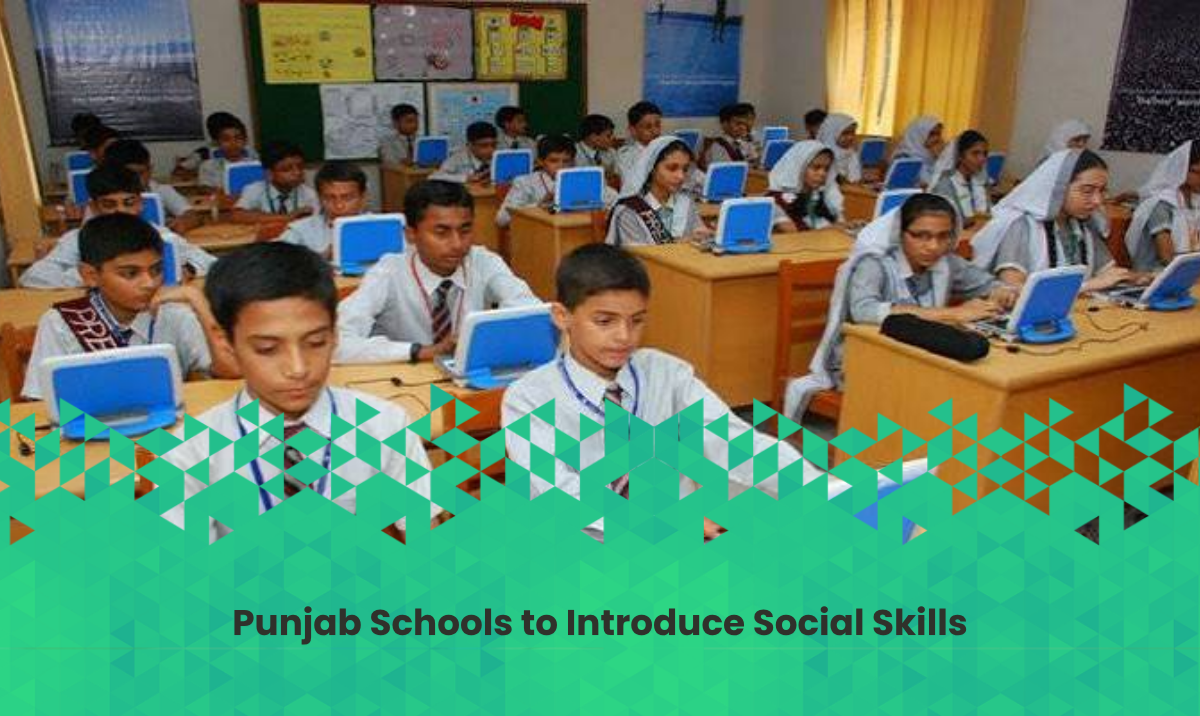
Punjab Schools to Introduce Social Skills Training for Students
In a landmark decision aimed at overhauling the educational framework, the Punjab government has officially decided to introduce comprehensive social skills training for students across all public schools in the province. Recognizing that modern education extends far beyond traditional textbooks and rote memorization, the School Education Department has rolled out a formal curriculum designed to cultivate interpersonal competence, emotional intelligence, and strong civic values among young learners.
The newly introduced initiative addresses a long-standing gap in Pakistan’s educational ecosystem. Traditionally, public schooling has heavily prioritized academic performance, examination grades, and theoretical knowledge. However, educationists and policymakers have increasingly noted that academic excellence alone is insufficient for navigating the complexities of the modern world. By integrating social skills training into the core framework, the Punjab government hopes to bridge the divide between academic instruction and real-world behavioral readiness.
Understanding the New Social Skills Curriculum
To ensure effective implementation, the School Education Department has drafted a structured curriculum that goes beyond abstract concepts. According to department officials, dedicated periods and practical activities will be formally incorporated into the daily school timetables across Punjab.
Rather than relying entirely on classroom lectures, the program utilizes interactive and activity-based learning. Students will engage in group projects, collaborative games, role-playing scenarios, and guided discussions. These practical sessions are meticulously designed to instill fundamental behavioral pillars:
-
Discipline: Teaching children the value of structure, punctuality, and self-regulation in both academic and personal environments.
-
Responsibility: Encouraging accountability for one's actions, respect for public and private property, and stewardship of the school environment.
-
Teamwork: Fostering the ability to collaborate smoothly with peers, respect diverse viewpoints, and achieve collective goals through cooperation.
-
Positive Social Behavior: Instilling empathy, conflict resolution techniques, tolerance, and courteous communication.
Vision Behind the Initiative: Rana Sikandar Hayat Speaks
Provincial Education Minister Rana Sikandar Hayat has been a vocal proponent of structural reforms within the province's academic framework. Elaborating on the vision behind this latest initiative, the minister emphasized that education must evolve to meet contemporary societal demands.
Minister Hayat further highlighted that shaping the moral and social fabric of students during their formative years is just as crucial as teaching mathematics or science. By embedding behavioral training directly into school hours, the government aims to combat bullying, reduce disciplinary issues, and foster a culture of mutual respect within public institutions.
Addressing the Broader Impact on Public Education
The integration of social skills training aligns with a broader series of progressive reforms spearheaded by the Punjab government to uplift public sector schooling. Over recent years, public schools have witnessed significant transformations, including infrastructure upgrades, teacher training programs focused on modern pedagogy, and the introduction of smart classrooms.
Experts in child development and educational psychology have widely applauded the move. Children who lack basic emotional regulation and social competence often struggle academically and face higher risks of behavioral friction later in life. By introducing structured interventions at the elementary and secondary levels, public schools will provide safe spaces where children can learn how to process constructive criticism, manage peer pressure, and express themselves constructively.
Implementation Strategy and Future Outlook
The School Education Department is currently coordinating with district education authorities to ensure that teachers are adequately prepared to mentor students under the new framework. Special orientation sessions and teaching guidelines are being dispatched to public schools across all districts of Punjab, ensuring uniformity in curriculum delivery.
As these dedicated periods roll out in classrooms, education authorities plan to monitor student progress through qualitative behavioral assessments rather than traditional examinations. The ultimate goal is to nurture a generation of confident, empathetic, and civic-minded individuals who can contribute meaningfully to society, strengthen community cohesion, and drive Pakistan forward with integrity and high moral standing.







Share your comments & questions here
No comments yet. Be the first to comment!