

 Home
Home
 National
 International
 Merit list
 Date Sheet
 Result
 Admission
 Study Abroad
.jpg)


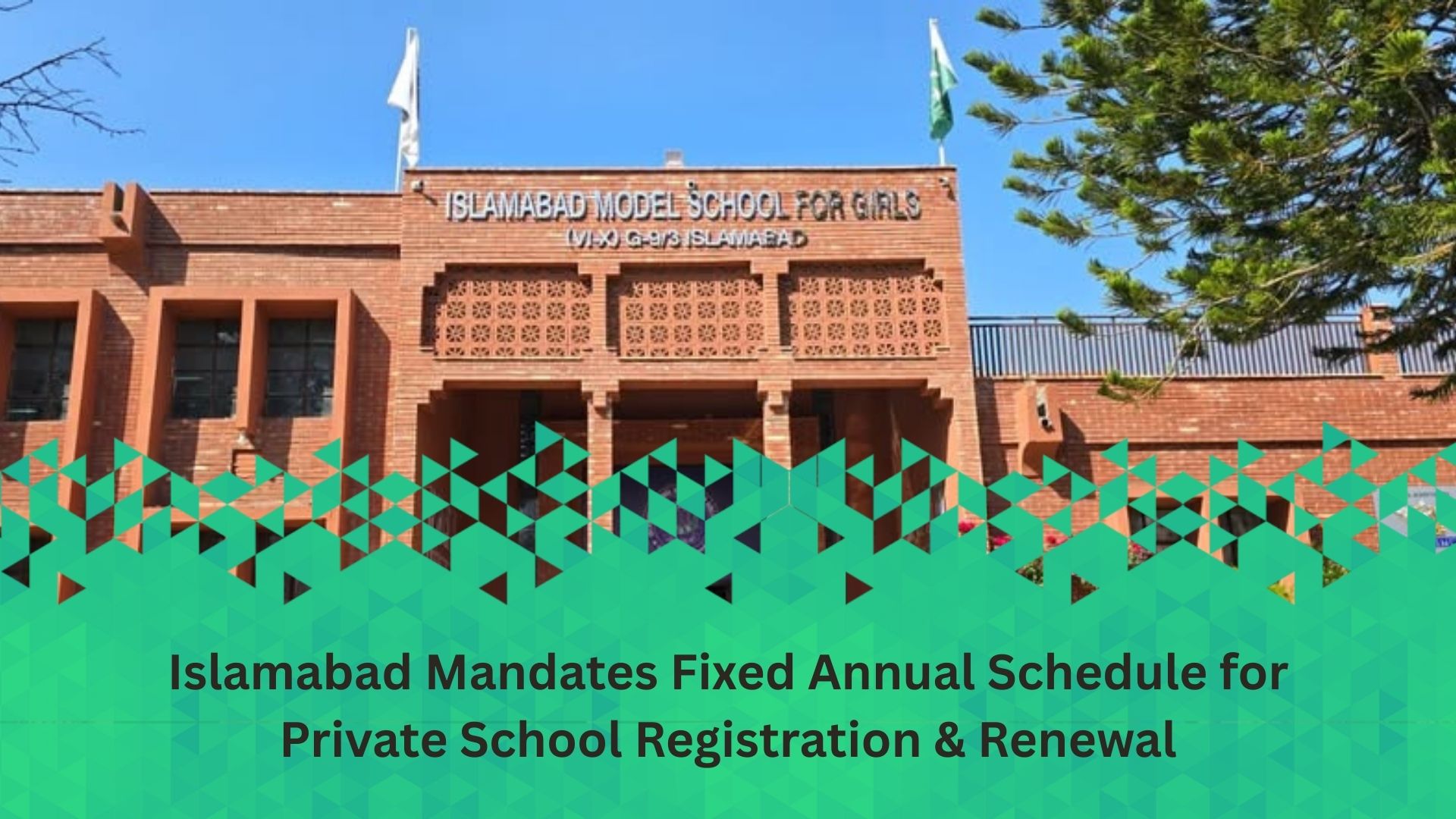
Islamabad Mandates Fixed Annual Schedule for Private School Registration & Renewal
In a significant move to streamline oversight and ensure compliance, the Private Educational Institutions Regulatory Authority (PEIRA) has unveiled a rigid, annual calendar for the registration and renewal of all private schools and colleges within the Islamabad Capital Territory (ICT) . The new framework, designed to curb regulatory gaps and standardize procedures, introduces a fixed window for renewals, year-round applications for new institutions, and an option for a three-year registration cycle.
The decisions, formalized under the powers vested by the Islamabad Capital Territory Private Educational Institutions (Registration and Regulation) Act, 2013 , aim to bring predictability, prevent fee losses, and align regulatory processes with the operational realities of educational institutions.
PEIRA's New Annual Timeline: Key Dates and Deadlines
At the core of the overhaul is the introduction of a non-negotiable annual schedule for registration renewals. According to the official announcement:
-
Renewal Application Window: All existing private educational institutions must apply for the renewal of their registration between March 1 and April 30 of each calendar year.
-
Processing Deadline: PEIRA commits to processing these renewal applications by June 30 .
-
Inspection Period: Where physical inspections are deemed necessary, they will be systematically conducted during the months of May and June .
This structured timeline marks a departure from more flexible or rolling renewal periods, compelling school administrations to prioritize regulatory compliance within a specific timeframe.
New School Registration: Open Applications, Fixed Approval Cut-off
For entrepreneurs and educational groups seeking to establish new institutions in the federal capital, the process retains some flexibility but with a clear annual deadline.
Prospective institutions may submit their registration applications throughout the year . However, in a key stipulation, PEIRA will only grant final approvals for these new registrations up to April 30 each year. This creates an effective annual cycle for the launch of new educational ventures, tying them to the same regulatory calendar as renewals.
Optional Three-Year Registration Cycle Introduced
In a move that may benefit well-established, compliant institutions, PEIRA has approved a significant optional extension. Schools now have the choice to opt for a three-year registration renewal cycle , as opposed to the standard two-year term.
This extension is contingent on two conditions: the advance payment of annual renewal fees for the full three-year period, and the institution's demonstrable compliance with all regulatory requirements prescribed under the latest 2024 rules . This option offers administrative ease and reduced paperwork for qualifying schools while ensuring upfront revenue for the regulator.
Rationale: Preventing Fee Losses and Aligning Stakeholder Interests
PEIRA authorities have stated that the necessary amendments to the registration rules were driven by pragmatic administrative and financial objectives.
A primary goal is to prevent regulatory fee losses that may have occurred under less time-bound systems. By consolidating the renewal process into a strict two-month window and offering a prepaid three-year option, the authority aims to ensure timely and predictable fee collection.
Furthermore, the revised schedule is intended to better align with stakeholder interests . For schools, it provides clarity and ample lead time for preparation. For the regulator, it allows for efficient planning of inspections and resource allocation throughout the year, particularly in the May-June period post-examinations when school premises are more accessible.
Implications for Private Schools in Islamabad
The new rules bring both structure and stringency to the educational landscape of Islamabad. School administrations will need to institutionalize their compliance checklists and financial planning around the March-April window. Failure to apply for renewal within the stipulated period could risk operational legality.
The three-year renewal option will be particularly attractive for top-tier schools with a consistent record of meeting PEIRA’s standards in infrastructure, faculty qualifications, safety protocols, and curriculum delivery. It effectively rewards compliance with reduced bureaucratic engagement.
Looking Ahead: A Move Towards Standardized Regulation
This regulatory tightening by PEIRA reflects a broader trend across Pakistan to bring private education, a rapidly expanding sector, under more systematic oversight. By implementing a fixed schedule, the authority is not only safeguarding its fiscal interests but also attempting to raise the benchmark for accountability.
The success of this new mechanism will hinge on PEIRA's own capacity to adhere to its declared processing and inspection timelines, ensuring that compliant schools are not unduly penalized by procedural delays. As the first cycle under these new rules approaches, the coming year will be a critical test for both the regulator and the regulated in Islamabad's private education sector.