


 Home
Home
 National
 International
 Merit list
 Date Sheet
 Result
 Admission
 Study Abroad
.jpg)


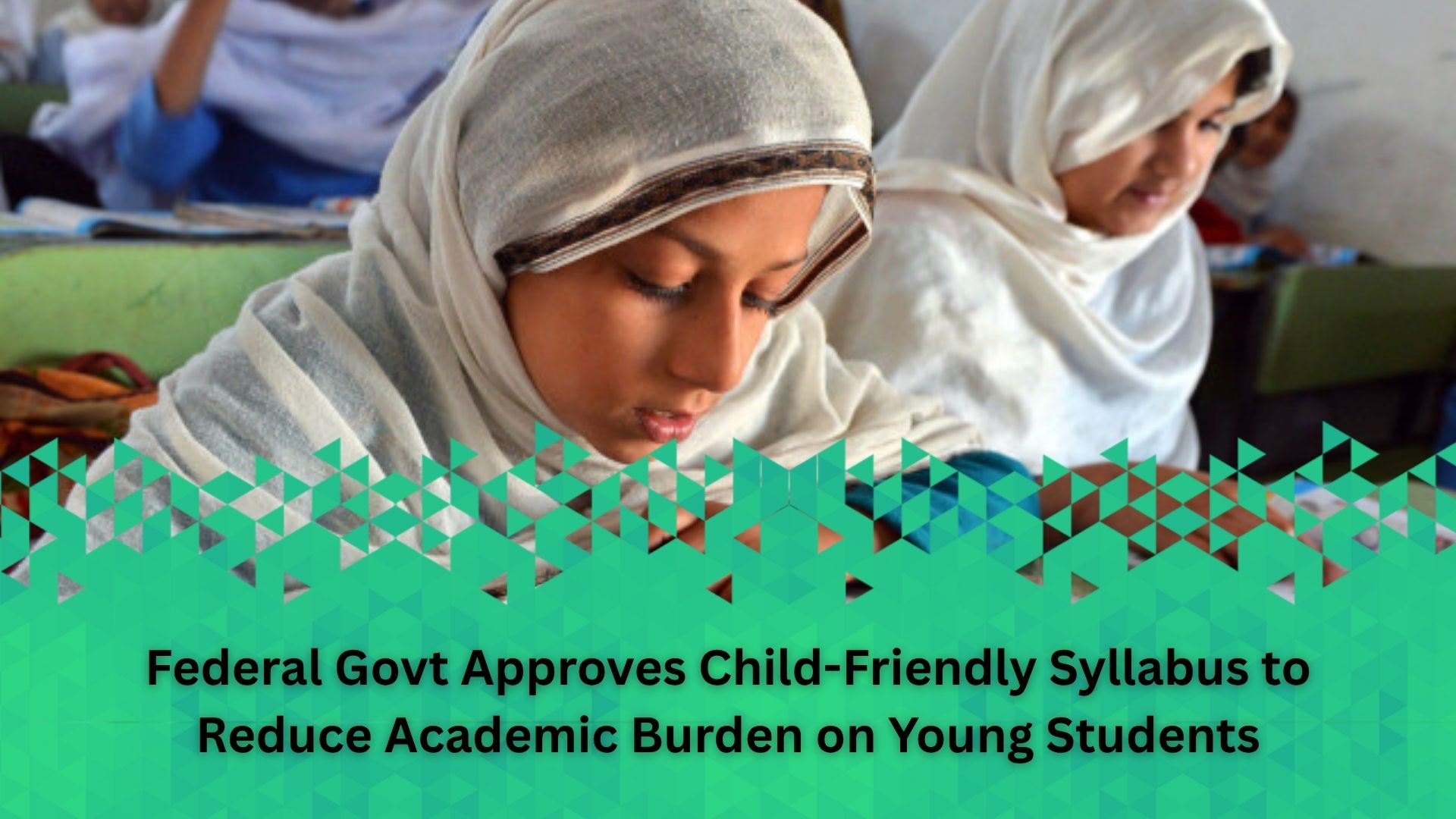
Federal Govt Approves Child-Friendly Syllabus to Reduce Academic Burden on Young Students
The federal government has granted in-principle approval to a new, child-friendly scheme of studies under the National Curriculum. The decision, announced on Tuesday, seeks to significantly reduce the academic burden on young children while introducing subjects more aligned with everyday life.
The draft was formally cleared by the government’s technical committee, with officials emphasizing that the changes are tailored for students ranging from nursery to grade two a group previously found to be struggling under excessive scholastic pressure at the very start of their educational journey.
Reducing Academic Pressure in Early Grades
According to surveys conducted jointly by federal and provincial education departments, young learners have been experiencing burnout, anxiety, and disengagement due to an overly demanding curriculum. Federal Secretary of Education Nadeem Mahbub confirmed that the revised framework directly responds to these findings.
“Children in the early grades were struggling because of the pressure created by the current structure,” Mahbub said. “The revised scheme will be finalized after further consultation before implementation, but the direction is clear—education must be developmentally appropriate and joyful, not burdensome.”
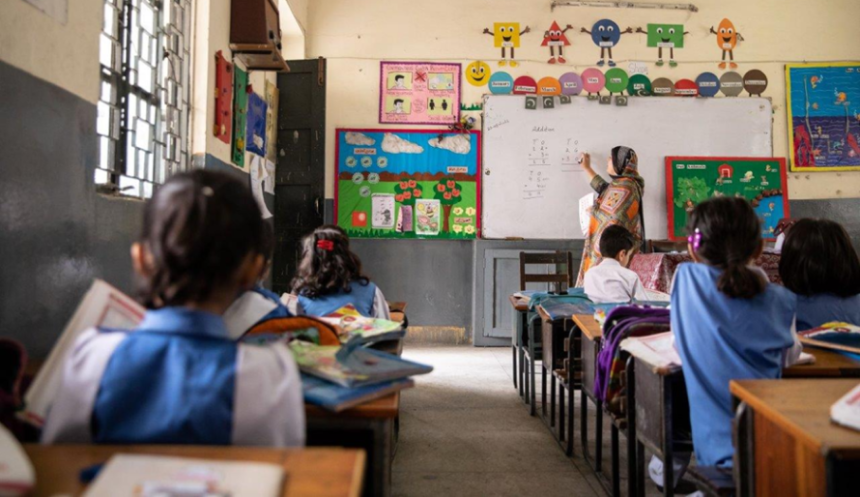
The new syllabus reduces rote learning and heavy homework loads, replacing them with activity-based learning, storytelling, and play-led methodologies. The goal is to foster curiosity and foundational skills rather than early academic burnout.
Revival of Civic Education and Modern Life Skills
Beyond reducing academic load, the government plans to bring back civic education in a revised, more relevant form. A new integrated subject combining social sciences and civics will be introduced to help students understand their rights, duties, and the functioning of society.
Officials further revealed that the updated framework will include modules on:
-
Life safety skills (basic first aid, road safety, disaster preparedness)
-
Climate change awareness (age-appropriate lessons on environmental stewardship)
-
Financial literacy (saving, budgeting, and responsible spending basics)
These additions reflect a growing recognition that traditional curricula have failed to prepare children for real-world challenges. By embedding these topics early, the government aims to produce well-rounded, informed citizens.
Implementation Timeline and Provincial Consensus
The Ministry of Education intends to roll out the new syllabus starting from the next academic session. In a notable display of intergovernmental coordination, officials confirmed that both the federal government and all provinces are on board with the proposed direction.
The draft was discussed during the third meeting of the technical committee, which saw participation from representatives of Islamabad, all four provinces, Azad Jammu and Kashmir (AJK), and Gilgit-Baltistan. This broad consensus is seen as critical for the uniform application of the National Curriculum across the country.
A Shift from Examination-Centric to Holistic Learning
Education analysts have long criticized Pakistan’s primary education system for being overly examination-centric, with children as young as five facing formal tests and heavy textbooks. The new child-friendly syllabus marks a philosophical departure prioritizing cognitive, social, and emotional development over memorization.
Next Steps: Consultation and Finalization
While the technical committee has granted in-principle approval, the syllabus will undergo further consultations with teachers, parents, and child psychologists before final notification. Teacher training programs and revised textbooks will also be developed to ensure smooth implementation.
Secretary Mahbub added that monitoring mechanisms would be put in place to assess the impact on student well-being and learning outcomes. “We are not just changing a document; we are changing a culture of how we treat our youngest learners,” he said.
The federal government’s approval of a child-friendly syllabus under the National Curriculum represents a transformative moment for early childhood education in the country. By easing academic pressure on nursery to grade two students and reintroducing civic education, life safety skills, climate awareness, and financial literacy, the new framework promises to make schooling more relevant, humane, and future-ready.
With provincial consensus already secured and implementation slated for the next academic session, parents and educators now await the final version of a syllabus that could redefine the first steps of a child’s learning journey.