




 Home
Home
 National
 International
 Merit list
 Date Sheet
 Result
 Admission
 Study Abroad


.jpg)
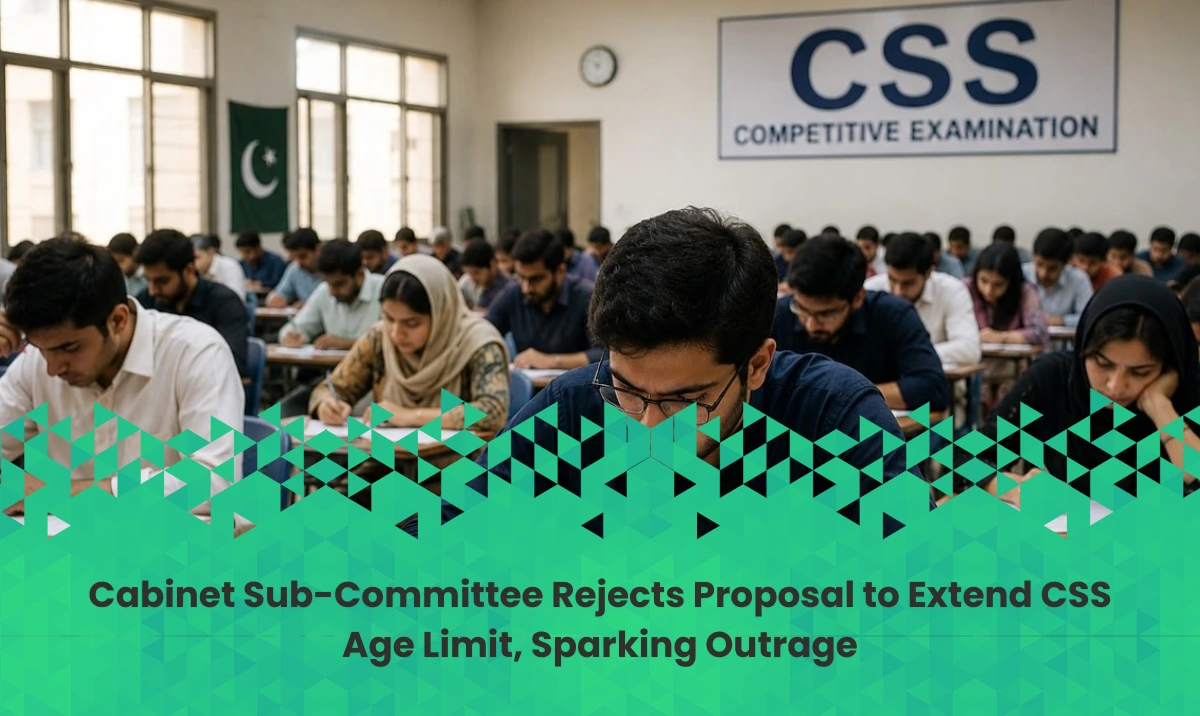
Major Debate Unfolds Over Pakistan’s CSS Age Limit and Bureaucratic Reforms
The future structure of Pakistan’s civil bureaucracy is currently hanging in the balance as critical discussions take place across legislative floors. The Senate Standing Committee recently held detailed, high-stakes deliberations concerning sweeping reforms to Pakistan’s civil service recruitment system. At the heart of these deliberations is a highly anticipated proposal to modify the upper CSS age limit for candidates appearing in the prestigious Central Superior Services (CSS) examination. Despite extensive reviews, divergent viewpoints among stakeholders have left a final decision pending, generating intense debate among aspirants, educators, and policymakers alike.
Senate Committee Reviews FPSC and Structural Overhauls
During the high-profile session, the parliamentary committee undertook a comprehensive review of matters concerning the Federal Public Service Commission (FPSC) , the administrative framework of the CSS exam Pakistan , and broader structural updates required within the country's public administration. Committee members put forward an array of progressive recommendations aimed at streamlining the recruitment pipeline, enhancing transparency, and keeping pace with modern global public service standards.
The conversation heavily gravitated toward structural flexibility. The committee chairman drew comparisons with international recruitment frameworks, highlighting that many progressive nations have successfully transitioned away from traditional, rigid competitive testing procedures. Instead, global models lean toward dynamic selection methodologies that test long-term administrative capacity, critical problem-solving, and adaptability.
The Core Debate: Raising the CSS Age Limit to 35
One of the most heavily contested items on the agenda was the proposal to extend the maximum CSS age limit from the current 30 years to 35 years. Proponents of the age relaxation argue that systemic factors—such as the nationwide transition to four-year bachelor programs, socio-economic challenges, and delayed educational milestones—justify giving mature candidates a fairer window to compete. Furthermore, female aspirants and student bodies have consistently advocated for relief, citing familial responsibilities and structural hurdles that often consume precious eligibility years.
However, administrative officials and institutional representatives offered stiff resistance to the idea. Briefing the committee, bureaucratic stakeholders argued that increasing the upper age bracket could compromise the foundational philosophy of inducting young, energetic, and fresh talent into the Pakistan bureaucracy . Officials expressed concern that an older entry demographic could reduce the overall duration of productive service years an officer spends in the government sector, potentially affecting operational efficiency and long-term administrative momentum.
Because of these conflicting perspectives, the committee concluded its session without reaching a consensus or passing a formal directive to amend the current age boundaries.
FPSC Clarifies Statistics Amid Claims of Declining Interest
Parallel to the age limit debate, public circles have recently buzzed over reported declines in candidate turnouts. Alarming claims previously circulated suggesting that registrations for the CSS examination had nosedived by nearly 45 to 50 percent, triggering concerns that young Pakistanis were losing interest in pursuing careers within the civil service.
The Federal Public Service Commission (FPSC) firmly pushed back against these assertions, labeling the reports as misleading and built upon flawed statistical comparisons. To set the record straight, the commission released empirical data detailing the scale of participation for recent examination cycles:
-
MCQ-Based Preliminary Test (MPT): A robust total of 64,081 candidates registered to take the initial screening test.
-
Written Examination Submissions: Following the preliminary phase, 18,139 candidates officially moved forward to submit applications for the rigorous written component.
-
Actual Test Takers: Out of those registered for the main papers, 12,792 candidates actively sat for the written examinations.
-
Qualified and Allocated Candidates: A total of 354 candidates successfully cleared the written papers. Following comprehensive psychological evaluations, medical assessments, and the final viva voce interviews, 342 candidates were declared successful, culminating in the allocation of 170 candidates to various coveted occupational groups.
The FPSC maintained that these figures demonstrate a consistently high level of competitive drive, proving that the CSS framework remains a prime aspiration for the nation's top academic minds despite the extreme difficulty of the examination phases.







Share your comments & questions here
No comments yet. Be the first to comment!