
.jpg)
 Home
Home
 Education
 Technology
 Relationship
 History
 Business
 Career
 Religion
 (1).jpg)


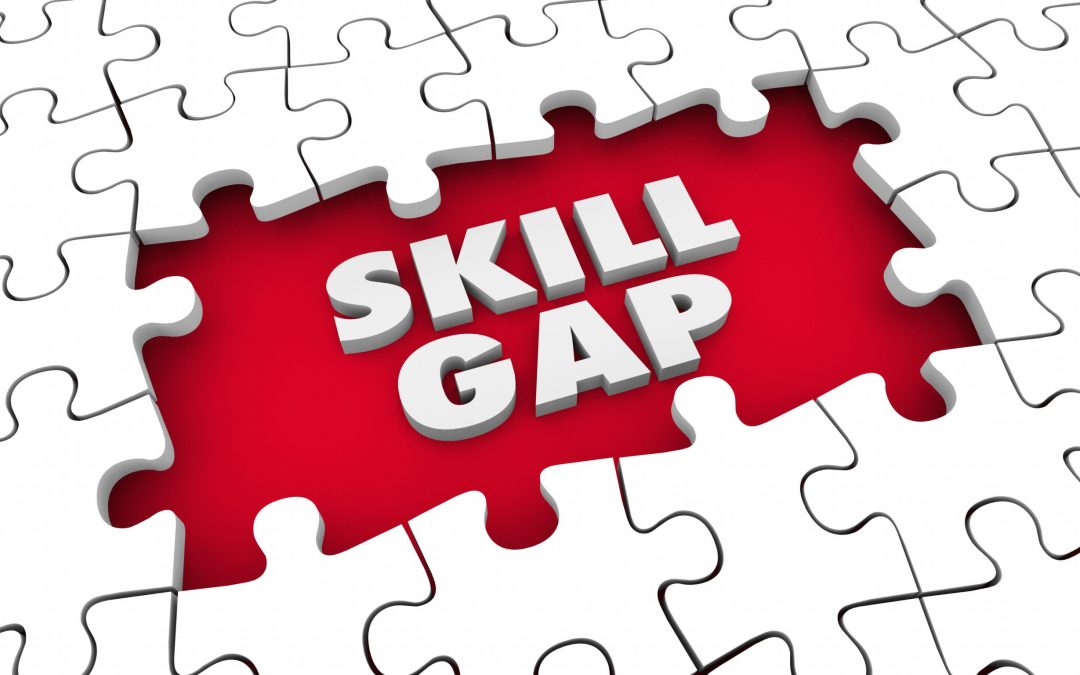
The "Skills Gap": Are Schools Preparing Students for the Real World?
In today’s rapidly evolving job market, a persistent and troubling question echoes through boardrooms, policy debates, and family kitchens alike: Are our schools truly preparing students for the real world? This disconnect between educational outcomes and workforce needs is known as the “skills gap,” and it represents one of the most critical challenges facing our economy and society.
Understanding the Skills Gap
The skills gap refers to the chasm between the skills employers actively seek and the skills job applicants possess. Employers across industries from advanced manufacturing and technology to healthcare and skilled trades consistently report difficulty finding candidates with the right mix of competencies. This isn’t just about technical expertise, it’s increasingly about soft skills like critical thinking, communication, collaboration, and adaptability.
A report by the World Economic Forum highlighted that analytical thinking, creativity, and technological literacy are among the top skills growing in demand. Yet, traditional education models, often focused on standardized testing and rote memorization, can lag in fostering these precise competencies.
The Traditional Classroom vs. Modern Workforce Demands
For decades, the primary goal of K-12 education was to build a foundation of core knowledge—math, science, history, and literature—and prepare students for university. The university path was presented as the default, and often sole, gateway to success. While academic knowledge remains vital, this model has shown cracks under the pressure of the 21st-century economy.
-
Emphasis on Theory Over Application: Students may learn the Pythagorean theorem but not how it applies to real-world fields like construction, engineering, or design. They might study biology without ever understanding its connection to public health crises or biotech innovations.
-
The Soft Skills Deficit: The modern workplace is project-based and team-oriented. Success hinges on the ability to solve unstructured problems, communicate clearly in digital and in-person settings, and manage time effectively. These are rarely “graded” subjects in a standard curriculum.
-
Pace of Technological Change: Curricula can take years to update, while technology and digital tools evolve at a breakneck speed. Many students graduate without foundational digital literacy in areas like data analysis, basic coding, or responsible use of AI, which are now relevant in nearly every career.
Signs of Progress: Bridging the Gap
Awareness of the skills gap has spurred significant innovation in educational approaches. Forward-thinking schools, districts, and educators are pioneering models that better connect learning to life:
-
Career and Technical Education (CTE) Revival: Modern CTE programs are a far cry from the old “vocational” tracks. Today’s CTE offers pathways in information technology, healthcare sciences, finance, and advanced manufacturing, combining academic rigor with hands-on, work-based learning. These programs often lead to industry-recognized certifications and direct pipelines to high-demand, high-wage jobs.
-
Project-Based Learning (PBL): PBL immerses students in complex, real-world problems over extended periods. Instead of memorizing facts for a test, students might design a sustainable garden for their community, launch a small business, or engineer a solution to a local environmental issue. This builds research, collaboration, and critical thinking skills organically.
-
Social-Emotional Learning (SEL): Schools are increasingly integrating SEL into the school day to explicitly teach self-awareness, resilience, empathy, and responsible decision-making the bedrock of emotional intelligence prized by employers.
-
Partnerships with Industry: The most effective strategies involve breaking down the school walls. Apprenticeships, internships, mentorship programs, and partnerships with local businesses give students authentic experience, professional networking, and a clear understanding of workplace expectations.
The Role of Stakeholders: A Collective Responsibility
Closing the skills gap is not a burden for schools to bear alone. It requires a systemic, collaborative effort:
-
Educators & Administrators must champion curriculum modernization, support teacher training in new pedagogies, and value diverse pathways to success beyond the four-year degree.
-
Policymakers can allocate funding for modern equipment, update educational standards to include applied skills, and incentivize business-education partnerships.
-
Employers must proactively engage with schools, help define the skills they need, offer work-based learning opportunities, and reconsider degree requirements for roles where skills and experience may be more relevant.
-
Parents & Students should advocate for a balanced education that values both knowledge and skills, explore CTE and PBL opportunities, and seek out hands-on learning experiences outside the classroom.
Conclusion: Redefining Preparation for the Real World
The question is not whether a classical education has value it does but whether it is sufficient on its own. Preparing students for the real world is no longer just about filling them with information. It is about equipping them with a versatile toolkit: a blend of core knowledge, technical proficiency, and durable human skills.
The schools that are succeeding in this mission are those creating adaptive, relevant, and experiential learning environments. They recognize that the “real world” is about solving unpredictable problems, working with diverse teams, and continuously learning. By aligning educational practices with these realities, we can transform the skills gap from a chronic economic problem into an engine of opportunity, ensuring that the next generation is not just ready for the future but poised to shape it.