




 Home
Home
 Education
 Technology
 Relationship
 History
 Business
 Career
 Religion
.jpg)


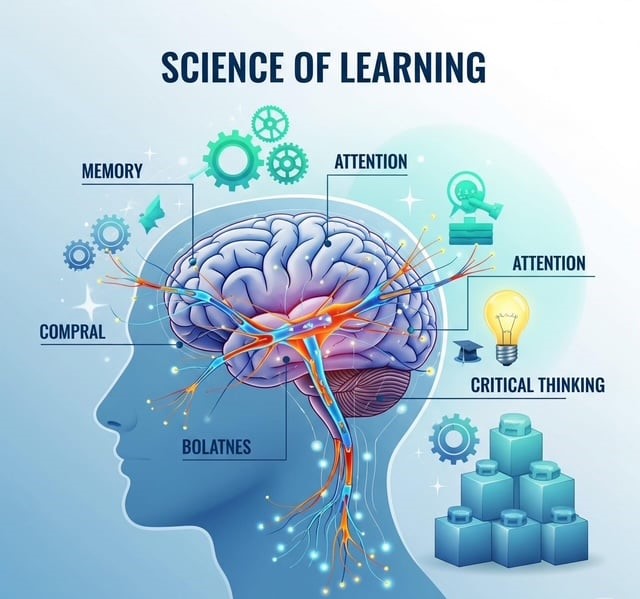
The Science of Learning: How Cognitive Psychology is Reshaping Classroom Teaching
In today’s rapidly evolving educational landscape, teachers are increasingly turning to evidence-based strategies grounded in cognitive psychology . This shift marks a move away from traditional, intuition-based teaching methods toward approaches informed by how the human brain actually learns, retains, and applies information. The integration of cognitive science into classroom practice is not just a trend, it’s a fundamental reshaping of pedagogy that promises to enhance student outcomes and create more effective, equitable learning environments.
Understanding the Learner’s Mind: Core Principles from Cognitive Psychology
Cognitive psychology, the scientific study of mental processes such as attention, memory, and problem-solving, provides several key insights that are directly applicable to education.
1. The Critical Role of Working Memory
One of the most significant contributions is the understanding of working memory the brain’s “scratch pad” where new information is held and processed. Cognitive science has shown that working memory has a limited capacity. When teachers present too much new information at once, or in a complex way, they risk cognitive overload , causing students to disengage or fail to encode the material. Modern classrooms are now being designed to manage this load. Teachers chunk information into digestible pieces, use clear and simple instructions, and leverage visuals and narratives to aid processing, thereby respecting the limits of working memory.
2. The Power of Retrieval Practice
Long dismissed as mere assessment, the act of retrieving information from memory through low-stakes quizzes, practice tests, or even brain dumps has been proven to be one of the most potent learning tools. Known as the testing effect or retrieval practice, this process strengthens neural pathways and makes future recall easier. Progressive educators are replacing some review sessions with “retrieval” sessions, where the focus is on actively recalling knowledge, which dramatically improves long-term retention more than passive re-reading or re-listening.
3. Spaced Learning Over Cramming
The spacing effect demonstrates that we learn more effectively when study is distributed over time rather than massed into a single session (cramming). Cognitive psychology explains that each time we revisit material after a forgetting curve has begun, the subsequent re-learning is deeper. Schools are applying this by spiraling curricula, where key concepts are revisited across weeks and months, and by designing homework and review schedules that strategically space out practice.
4. Interleaving for Deeper Understanding
Instead of blocking practice on one type of problem (20 multiplication problems), interleaving mixes different types of problems or subjects (multiplication, division, and fraction problems in one set). This feels harder and can slow initial learning, but it leads to superior discrimination between concepts and better long-term skill transfer. Teachers in subjects like mathematics, science, and language arts are designing mixed practice sets to build more flexible and resilient understanding.
5. Elaboration and Metacognition
Cognitive science emphasizes elaboration the process of connecting new information to prior knowledge and explaining it in one’s own words. Techniques like self-explanation, teaching others, and creating analogies foster deeper processing. Furthermore, teaching students metacognitive strategies how to think about their own thinking, plan their learning, monitor their comprehension, and evaluate their approach empowers them to become self-directed learners.
From Theory to Classroom: Practical Transformations
These principles are moving from the lab to the lesson plan in tangible ways:
-
Flipped Classrooms: This model leverages cognitive principles by having students acquire basic knowledge (via video, reading) at home, freeing classroom time for active retrieval, application, and elaboration with teacher guidance activities that benefit most from expert support.
-
Formative Assessment Design: Quizzes are no longer just for grades. They are used as frequent, low-stakes retrieval practice tools that provide feedback to both student and teacher, illuminating gaps in understanding.
-
Curriculum Design: Spaced and interleaved practice is being baked into curriculum maps and digital learning platforms, which can algorithmically schedule review sessions at optimal intervals for memory consolidation.
-
Direct Instruction on Learning Strategies: Schools are explicitly teaching students how to learn introducing them to spacing, retrieval practice, and dual-coding (combining words and visuals), thereby giving them the tools to study smarter, not just harder.
Challenges and the Path Forward
Implementing these science-backed methods is not without hurdles. It requires significant teacher professional development to unlearn entrenched practices. There is also the challenge of scaling these approaches in diverse classrooms and aligning them with standardized testing regimes that often prioritize content coverage over depth of learning.
However, the momentum is building. The growing field of educational neuroscience and initiatives like the Science of Learning are bridging the gap between researchers and practitioners. When teachers understand the “why” behind the strategies the cognitive mechanisms at play they can adapt them more creatively and effectively to their unique classroom contexts.
A Future Built on Evidence
The integration of cognitive psychology into teaching represents a profound shift toward evidence-based education . It moves the profession from a craft based largely on tradition and anecdote to one informed by robust scientific understanding of the human mind. This doesn’t devalue teacher intuition rather, it enhances it with powerful tools. By aligning teaching methods with how students naturally learn, remember, and think, educators are building more inclusive and effective classrooms. The ultimate result is a generation of students who are not just knowledgeable, but who are equipped with the cognitive tools and metacognitive awareness to be lifelong learners prepared to navigate and master an increasingly complex world. The science of learning is, therefore, not merely reshaping classroom teaching it is reshaping the future potential of every student who walks through the classroom door.










Share your comments & questions here
No comments yet. Be the first to comment!