Home
Home
 National
 International
 Merit list
 Date Sheet
 Result
 Admission
 Study Abroad





University of Agriculture Faisalabad (UAF) Raises Undergraduate Fees by Over 50%, Sparking Student and Parent Concern
The University of Agriculture Faisalabad (UAF)—one of Pakistan's premier and most historically accessible higher education institutions—has announced a sweeping and dramatic upward revision of its undergraduate fee structures. Entering the 2026-27 academic session, thousands of prospective students and their families are confronting an unprecedented financial reality as semester charges for multiple flagship programs surge by more than 50% compared to preceding terms.
This sudden escalation has triggered intense debates across academic circles, student bodies, and digital forums. As public sector universities grapple with compounding operational overheads, inflation, and shrinking financial allocations, questions are mounting regarding how ordinary households will manage the mounting cost of a quality university education.
Detailed Breakdown of the UAF Fee Hike for 2026-27
According to official notifications and updated fee schedules released by the university administration, the financial adjustment is not uniform, but major disciplines face steep corrections.
The cornerstone program of the institution, the B.Sc. (Hons.) Agriculture, has experienced an immediate and drastic adjustment. The first-semester fee for the program—which stood at Rs. 35,000 during the 2025-26 academic year—has officially climbed to Rs. 54,000 for the incoming 2026-27 session. This translates to a direct 54% increase, catching many applicants off guard who had budgeted based on historical precedents.
Other undergraduate disciplines across various faculties, including allied sciences, information technology, and social sciences, are seeing similar spikes ranging from 40% to over 55% when factoring in consolidated admission charges, library fees, lab retainers, and semester registration costs.
Driving Factors Behind the University of Agriculture Faisalabad Fee Revision
University administrators and syndicate insiders have defended the decision, pointing to severe macroeconomic pressures. Public universities nationwide have faced acute budgetary shortfalls over recent fiscal cycles. Key drivers behind the decision include:
-
Inflationary Pressures on Operational Costs: Escalating utility tariffs, particularly electricity and gas rates for sprawling research campuses, experimental fields, and student residential hostels, have bloated institutional utility bills.
-
Research and Laboratory Maintenance: Maintaining state-of-the-art agricultural biotech labs, experimental farms, machinery, and veterinary clinics demands capital that standard government grants no longer fully cover.
-
Inflation-Driven Salaries and Pensions: Adjustments to employee salaries and pension liabilities to match soaring national inflation have placed severe liquidity constraints on university treasuries.
Despite these institutional justifications, critics and student organizations argue that shifting the financial burden directly onto students undermines the fundamental purpose of public-sector education: providing accessible, merit-based pathways for middle and lower-middle-class youth.
Student Backlash and Socioeconomic Implications
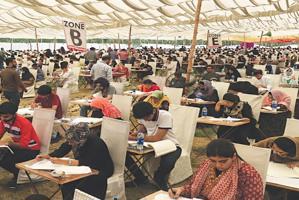
The timing of the fee hike is particularly sensitive. UAF recently concluded its multi-phase undergraduate entrance testing framework for the 2026-27 admissions cycle, leaving newly admitted candidates with very little window to pivot or reorganize their finances.
For an agrarian economy where families heavily rely on public universities to uplift their socioeconomic status, a 50%+ jump in entry-level semester fees represents a major roadblock. Education economists warn that this trend risks triggering higher dropout rates, deferments, or an exodus of deserving candidates who may altogether forgo higher education in favor of immediate employment.
Financial Aid, Scholarships, and Institutional Mitigation
Recognizing the gravity of the backlash, academic advisors and student welfare offices are emphasizing the availability of institutional financial safety nets. UAF historically supports a segment of its student body through Punjab Educational Endowment Fund (PEEF) scholarships, HEC-funded need-based grants, and internal university donor-funded waivers.
University spokespersons have reiterated that measures are being taken to safeguard meritorious yet financially vulnerable students. However, questions remain regarding whether the scale of existing scholarship frameworks will expand proportionately to match the magnitude of this year's fee escalation.
As the 2026-27 academic term commences, all eyes will remain on the UAF administration to see if further concessions, installment-based fee payment models, or policy reviews will be introduced to ease the severe financial strain resting squarely on the shoulders of Pakistan's future agriculturists and scientists.