Home
 National
 International
 Merit list
 Date Sheet
 Result
 Admission
 Study Abroad




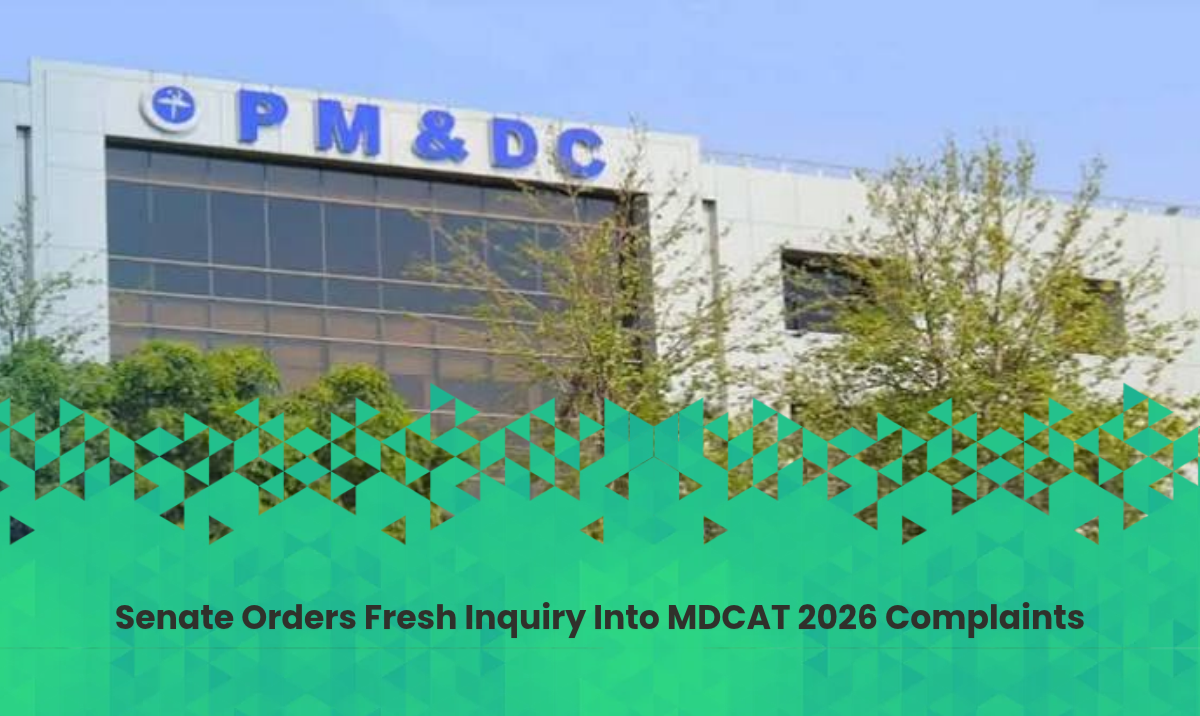
Senate Orders Fresh Inquiry Into MDCAT 2026 Complaints: A Deep Dive Into Transparency and PMDC Policies
The landscape of professional education in Pakistan has once again been shaken by widespread controversy surrounding the Medical and Dental College Admission Test (MDCAT 2026). In a major development, the Senate Standing Committee on National Health Services, Regulations and Coordination has officially directed the health ministry to launch a fresh inquiry into MDCAT 2026 complaints within a strict one-week deadline.
This parliamentary intervention highlights growing concerns among lawmakers, students, and parents regarding the transparency, credibility, and administrative handling of the country’s most crucial medical entrance examination by the Pakistan Medical and Dental Council (PMDC).
Background of the MDCAT 2026 Controversy
For thousands of aspiring medical students across Pakistan, the MDCAT serves as the ultimate gateway to realizing their dreams of pursuing a Bachelor of Medicine, Bachelor of Surgery (MBBS) or Bachelor of Dental Surgery (BDS) degree. However, year after year, the examination has been plagued by logistical challenges, allegations of out-of-syllabus questions, marking discrepancies, and a general lack of trust in the testing mechanism.
Following the conduct of MDCAT 2026, numerous candidates and student bodies raised serious grievances regarding the examination process. These complaints poured into federal and provincial forums, prompting parliamentary oversight. The grievances primarily focused on alleged mismanagement, unclear testing protocols, and a perceived lack of institutional accountability by the PMDC.
During the high-stakes committee meeting, PMDC officials presented their initial briefing, maintaining that no major irregularities or administrative anomalies had been discovered during the administration of the test. However, this defensive stance failed to satisfy the senators, who noted that the volume of complaints from aspirants and their parents could not be brushed aside lightly.
Key Objections Raised by the Senate Standing Committee
The Senate committee did not hold back in scrutinizing the operational procedures of the PMDC. Lawmakers raised multiple fundamental questions concerning the security of the examination, student rights, and arbitrary policy shifts:
1. Retention of Question Booklets
One of the most contentious issues highlighted during the session was the PMDC's practice of collecting question booklets from candidates immediately after the test concluded, denying students the right to retain copies.
-
Senators questioned the rationale behind keeping the paper confidential from the very students who sat for it.
-
Lawmakers emphasized that public availability of the question bank is vital for maintaining transparency, allowing students to cross-check answers, and safeguarding overall merit.
In response, PMDC officials argued that collecting the booklets was a necessary security measure designed to protect their proprietary question bank. They claimed that releasing the papers would allow coaching centers and future candidates to gain an unfair advantage in subsequent years.
Nonetheless, the committee outright rejected this justification, pointing out that secrecy in a high-merit national exam often breeds suspicion and distrust rather than protecting exam integrity.
2. Controversial Policy on Medical Education Abroad
Apart from the test mechanics themselves, the committee heavily scrutinized a recently introduced PMDC policy that mandated students intending to pursue medical education abroad to also take the MDCAT.
-
Senators questioned the legal and logical backing of forcing overseas-bound students through a domestic entrance test framework meant strictly for local admissions.
-
Under intense pressure and following the committee’s direct intervention, the PMDC was forced to withdraw this controversial policy.
The committee viewed this swift reversal as further evidence of hasty, poorly planned decision-making within the regulatory body, which adds unnecessary stress to students and families.
Dissatisfaction with the Initial Report and New Directives
Expressing profound dissatisfaction with the initial inquiry findings submitted by the regulatory authorities, the Senate committee concluded that a superficial review would not suffice.
Consequently, the Ministry of National Health Services has been officially directed to:
-
Conduct a fresh, transparent, and comprehensive inquiry into all MDCAT 2026 complaints.
-
Complete the probe and submit detailed findings within one week.
-
Address core student grievances regarding examination anomalies, scoring transparency, and future safeguards.
Lawmakers warned that any attempts to shield administrative flaws or bypass accountability would be met with strict parliamentary action. They reiterated that the future of Pakistan's healthcare system heavily relies on selecting the most competent candidates through a foolproof, uncompromised merit system.
What Lies Ahead for MDCAT 2026 Aspirants?
The upcoming week will be crucial for the PMDC and the Ministry of National Health Services as they race against time to compile the mandated inquiry report. For students and parents affected by the ambiguities of MDCAT 2026, this Senate-ordered investigation brings a renewed glimmer of hope for justice and institutional reform.
As educational stakeholders await the outcome of this fresh probe, pressure is mounting on the government to permanently overhaul standard operating procedures (SOPs) for medical entry tests. Ensuring absolute transparency, digital security without compromising student access, and open communication channels will be essential for the PMDC to restore its credibility among the academic community in Pakistan.