




 Home
Home
 National
 International
 Merit list
 Date Sheet
 Result
 Admission
 Study Abroad




Revolutionary Reforms in Punjab Educational Boards Exam System: Great News for Students
Education is the fundamental pillar of any society's progress, and a transparent, fair, and modern examination system plays a vital role in nurturing students' capabilities. Recently, the Government of Punjab and educational authorities have made a historic decision that will profoundly and positively impact the academic lives of millions of students. Excellent news has emerged for the approximately 5 million students appearing for exams under the educational boards across Punjab, as outdated practices are being replaced with modern and uniform policies.
In this article, we will take a detailed look at all the vital reforms, policies, and changes being introduced under the reforms in the educational boards' examination system, aimed at bringing transparency and alleviating students' difficulties.
Uniformity in Paper Pattern and Difficulty Level
In the past, a common grievance among students was the discrepancy in the standard and difficulty level of question papers across various educational boards, creating imbalances in score achievements. Finding a permanent solution to this issue, authorities have decided that:
-
The paper pattern will be maintained uniformly across all boards.
-
The difficulty level standard in question papers will be consistent, ensuring no student from any particular district or board faces discriminatory challenges.
-
The difficulty level will be identical for both private and regular candidates.
Muzammil Mahmood, Chairman of the Task Force on Examinations, clarified that in upcoming exams, question papers across all boards will be fully harmonized, thereby upholding merit.
Modern On-Screen Marking System and Transparency
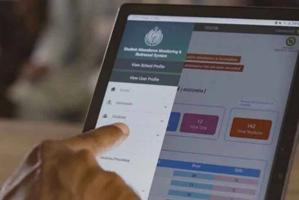
The evaluation phase following examinations is critical. Traditional methods frequently suffered from human error or inconsistencies in point deductions. To meet the demands of the modern era, a revolutionary on-screen marking system is being implemented:
-
Teachers will evaluate students' papers through on-screen marking instead of traditional paper booklets.
-
This digital system ensures maximum transparency in marking, reducing the margin of error to near zero.
-
A major benefit of on-screen marking is that students will also have access to an online facility for re-checking, saving them precious time and hassle.
Rubric Standards and Achieving 100% Marks in Urdu and English
Many students previously struggled to score high marks in language subjects, particularly Urdu and English, due to a lack of clear and modern evaluation metrics. Establishing a proper rubric standard will completely transform this scenario:
-
Assessment criteria will be rendered exceptionally clear and transparent under the rubric system.
-
With the enforcement of this improved and scientific standard, students will now be fully capable of securing 100% marks in Urdu and English papers.
-
This will significantly enhance the assessment of students' writing proficiencies and grammatical accuracy, serving them well in their future academic journeys.
Establishment of a Secrecy Department and Exam Confidentiality
Maintaining confidentiality and secrecy of question papers remains a major challenge during exam cycles. Rumors of paper leaks or early disclosures undermine the credibility of the educational system. To counter this, the government has taken another critical step:
-
A separate department will be established to maintain fool-proof secrecy during examinations.
-
This new wing will exclusively monitor the preparation, dispatch, and confidentiality of exam papers to eliminate any chance of negligence or oversight.
Fixed Timeline for Intermediate Results
Previously, various educational boards announced intermediate results (Part I and Part II annual exams) on varying schedules, causing severe mental stress and delays for students aspiring to university admissions. To resolve this issue, a finalized and uniform schedule has been set:
-
Moving forward, intermediate results across all educational boards will regularly be released in the second week of August.
-
This synchronized schedule will allow admissions in universities and colleges to commence on time, preventing any wastage of academic years for students.









Share your comments & questions here
No comments yet. Be the first to comment!