


 Home
Home
 National
 International
 Merit list
 Date Sheet
 Result
 Admission
 Study Abroad
.jpg)


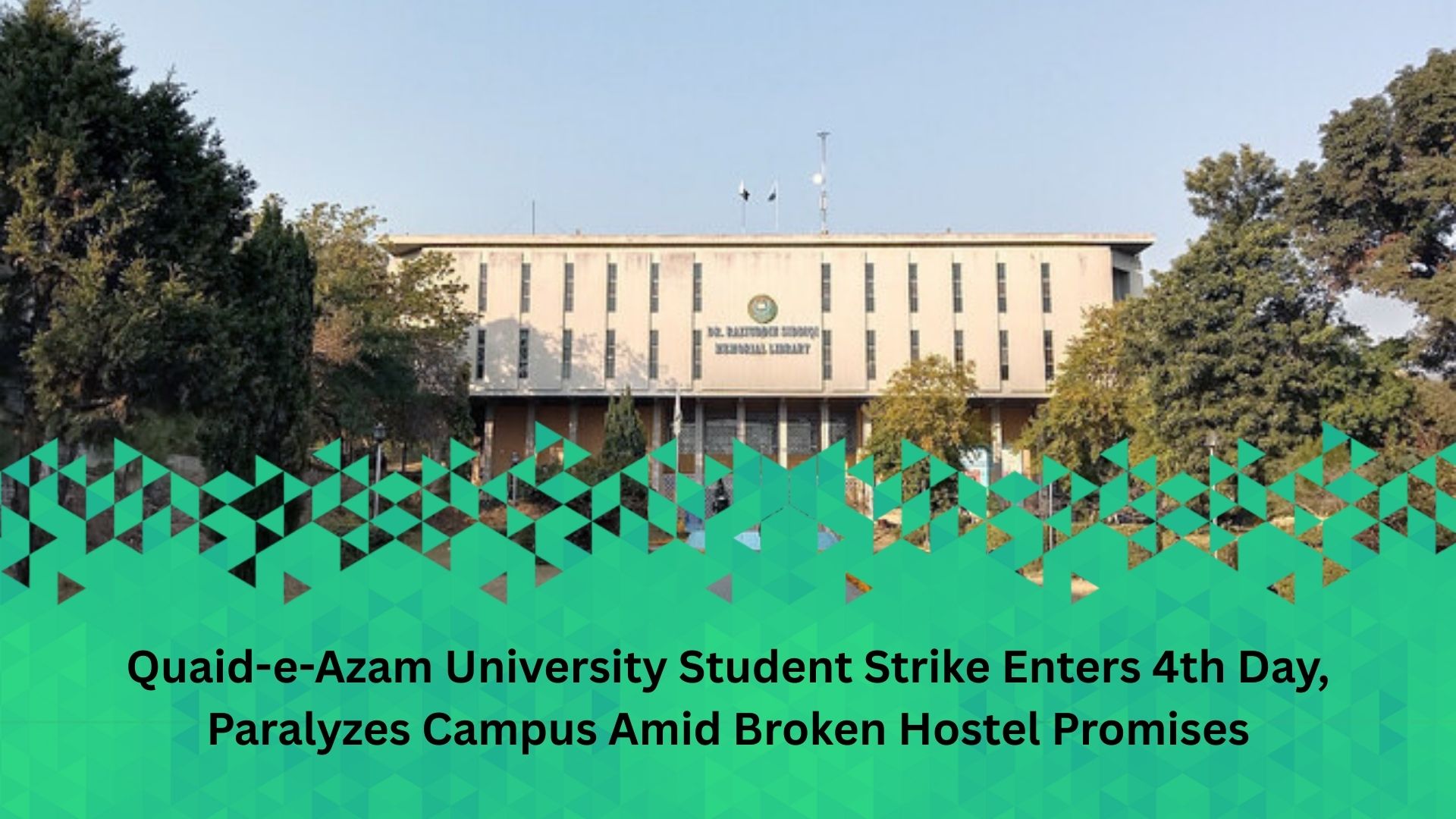
Quaid-e-Azam University Student Strike Enters 4th Day, Paralyzes Campus Amid Broken Hostel Promises
The sprawling campus of Quaid-e-Azam University (QAU) , Pakistan's premier higher education institution, remained in a state of paralysis for the fourth consecutive day on Thursday as a student-led strike over severe hostel accommodation shortages brought all academic and administrative activities to a grinding halt. Despite reports of a resolution following high-level talks a day earlier, student leaders defiantly continued their protest, citing a lack of tangible, written guarantees from the Higher Education Commission (HEC) .
The protest, organized by the Quaid-e-Azam University Students Council, has effectively shut down the university. Final term examinations, a critical academic milestone, have been severely impacted, with no papers held throughout the week. University transport services were also suspended, further isolating the campus and underscoring the depth of the crisis.
Broken Promises Fuel Escalation
The strike’s continuation marks a dramatic turn following what appeared to be a breakthrough on Wednesday. After prolonged negotiations between student representatives and HEC officials, the government body had assured that the students' grievances would be addressed promptly. In response, the Students Council initially announced the end of their protest sit-in outside the HEC headquarters.
However, the mood on campus shifted overnight. Student leaders declared that the verbal assurances were insufficient. They have now crystalized their demand into a single, non-negotiable point: the immediate and formal approval for the construction of a new student hostel to alleviate the chronic accommodation crisis that has plagued QAU for years.
"A promise in a meeting room is not enough. We have heard these assurances before, and our situation has only worsened," stated a spokesperson for the QAU Students Council, who addressed a gathering of several hundred students on Thursday. "We need a signed notification, a concrete plan, and a visible start to the construction process. Until then, the strike continues. Our academic future is already being damaged by this strike, but it is a sacrifice we are forced to make for our basic right to shelter."
Academic Calendar in Jeopardy
The university administration faces mounting pressure as the disruption threatens to derail the entire academic calendar. Professors and department heads have expressed growing concern over the indefinite postponement of final exams, which could delay semester completion, result declarations, and the commencement of the next academic session.
"The situation is untenable," said a senior faculty member on condition of anonymity. "Students are justified in their demands the hostel shortage is a known, persistent issue. However, the continuous disruption creates a compounding problem. A swift and credible intervention from the highest level is now required."
The hostel shortage at QAU is a long-standing issue , with hundreds of students, particularly from remote and low-income backgrounds, facing immense hardship each year. Many are forced to seek expensive and often substandard private housing far from campus, impacting their studies, finances, and security.
HEC’s Response and Mounting Pressure
Officials from the HEC have yet to issue a fresh public statement following the resumption of the strike. Sources within the commission suggest that discussions are ongoing at the federal level to find a rapid solution. The HEC is reportedly caught between the urgent need to restore educational normalcy and the procedural and budgetary complexities involved in sanctioning a new construction project at a federal university.
Education analysts warn that the standoff at QAU is symptomatic of a broader crisis in Pakistan's public higher education sector, which is grappling with chronic underfunding, infrastructure decay, and a disconnect between student needs and bureaucratic processes.
"The QAU strike is a flashpoint," commented Dr. Ayesha Khan, an education policy expert. "It highlights how basic student welfare issues, when left unaddressed, can escalate into full-blown institutional crises. The government and HEC must move beyond firefighting and announce a sustainable, long-term plan for hostel infrastructure across all major universities."
What Comes Next?
With the Students Council showing no signs of backing down, the ball lies firmly in the court of the university administration and the HEC. The potential outcomes range from a hurried issuance of a formal hostel approval to de-escalate the situation, to a more protracted confrontation that could invite further political and judicial intervention.
Parents and guardians have also begun voicing their anxiety over the suspended exams and the uncertainty surrounding their children's education. As the strike enters a potential fifth day, the costs academic, reputational, and financial continue to rise for all stakeholders.
The coming 24 hours are seen as critical. Either a credible, written agreement emerges to end the impasse, or Quaid-e-Azam University, a symbol of Pakistan's academic aspirations, faces an extended period of disruption, with its students paying the highest price.