Home
Home
 National
 International
 Merit list
 Date Sheet
 Result
 Admission
 Study Abroad




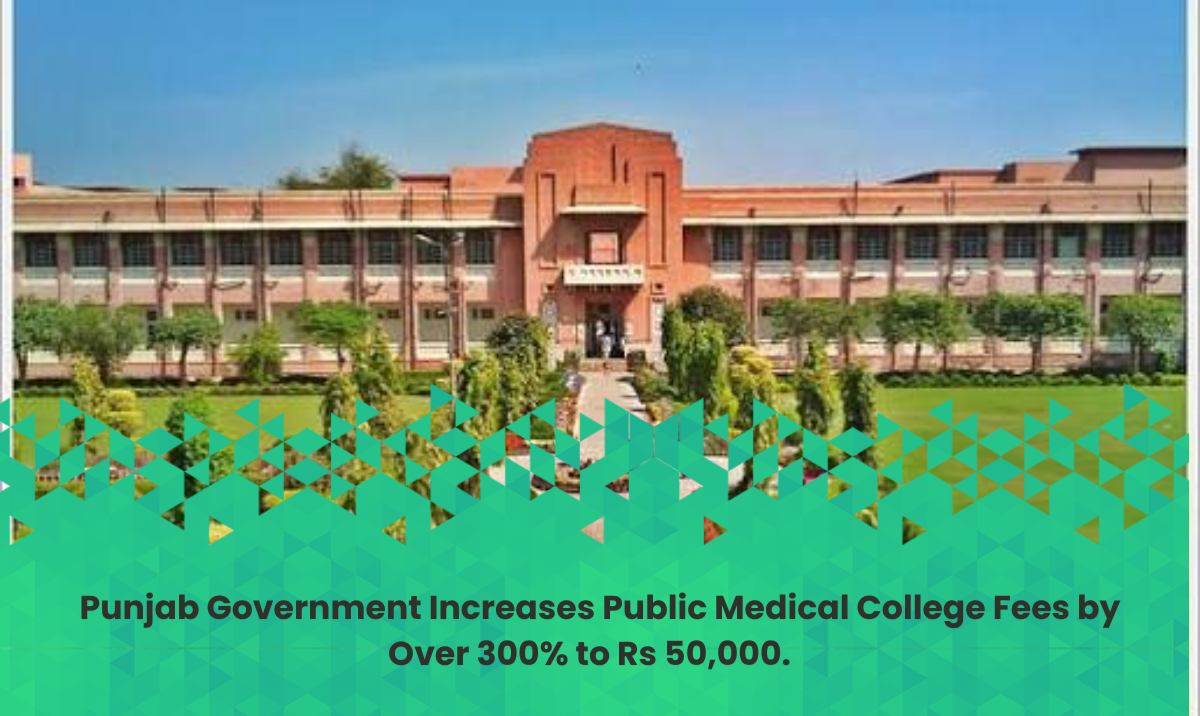
Punjab Government Medical College Fee Increase: Tuition Hiked by Over 300%
In a significant move that has triggered widespread concern among prospective medical students and families across the province, the provincial authorities have implemented a major Punjab Government Medical College Fee Increase. Under the newly notified admission policy and financial structure for public sector institutions, the government has delivered what education advocates describe as an inflation shock to talented, high-achieving candidates.
Sources from educational authorities confirm that annual tuition fees across public-sector medical and dental institutions have been raised by more than 300%. Previously fixed at a subsidised rate of Rs 15,000 per year, the annual public medical college tuition fees for open-merit seats have now been officially set at Rs 50,000 per annum.
This sudden, steep hike in educational expenses has made higher medical studies significantly harder to afford, particularly for hardworking students hailing from lower-income and middle-class socio-economic backgrounds.
Details of the Revised Fee Structure
For decades, public sector medical institutions in Punjab served as a beacon of hope for brilliant students who lacked the massive financial resources required for private medical institutes. The low fee structure allowed top-tier merit scorers to complete their Bachelor of Medicine, Bachelor of Surgery (MBBS) and Bachelor of Dental Surgery (BDS) degrees without overburdening their households.
However, under the newly announced admission framework, the financial dynamic has shifted radically:
-
Previous Annual Tuition Fee: Rs 15,000
-
Revised Annual Tuition Fee: Rs 50,000
-
Overall Rate of Increase: Over 300%
-
Applicability: Open-merit undergraduate MBBS and BDS seats in all government-run institutions.
In addition to tuition charges, medical students must also account for university registration fees, annual examination fees, hostel accommodation, mess charges, and essential practical materials. When combined with broader economic pressures and record-high general inflation, the cumulative burden of medical education costs in Pakistan threatens to place quality healthcare training out of reach for deserving candidates.
Impact on High-Merit, Low-Income Students
Medical admission in Punjab’s government colleges is famously competitive, requiring students to pass rigorous examinations such as the Medical and Dental College Admission Test (MDCAT). Students who earn admission on open-merit medical seats typically spend years in dedicated academic preparation.
For deserving students from impoverished families, earning a government seat on pure merit was historically a ticket out of poverty. By keeping public medical college tuition fees minimal, the government ensured that financial constraints would not block a brilliant student’s path toward becoming a doctor.
With annual tuition multiplying overnight from Rs 15,000 to Rs 50,000, students and parents express deep frustration. Many fear that middle-class households—already struggling with escalating utility bills, transport costs, and daily living expenses—will now have to take loans or sell assets to sponsor their children’s medical degrees.
1. Financial Stress on Middle-Class Families
Parents argue that while an adjustment for inflation might be understandable, an overnight jump exceeding 300% is disproportionate. Many point out that earning power has not increased at a comparable rate, making the sudden extra demand on household budgets a heavy blow.
2. Potential Student Dropouts and Career Pivots
Student representatives caution that steep fee hikes without adequate safety nets will force bright students to abandon their professional dreams. Many fear candidates will pivot toward lower-cost disciplines despite qualifying on merit for prestigious medical seats.
3. Demands for Financial Assistance
In response to the Punjab Government Medical College Fee Increase, student organizations are urging the provincial government and relevant health departments to establish comprehensive scholarship schemes, interest-free educational loans, and fee-waiver programs specifically tailored for low-income candidates on open merit.
Government Perspective and Institutional Justifications
While the policy change has sparked public outrage, institutional representatives and government planners defend the decision as a necessary step to maintain quality standards and institutional sustainability.
Officials argue that the previous tuition fee of Rs 15,000 had remained stagnant for several years despite soaring operational costs. According to administrative sources:
-
Rising Operational Expenses: Laboratory equipment, chemicals, modern medical technology, and facility maintenance have experienced substantial inflation.
-
Quality Maintenance: Public medical colleges require updated infrastructure, digital libraries, and specialized instructional tools to comply with national and international medical education accreditations.
-
Resource Allocation: Authorities maintain that the updated fee remains heavily subsidized compared to the millions charged annually by private medical colleges.
However, critics counter that the state carries a fundamental constitutional duty to subsidize professional education for merit scholars, ensuring that merit—not financial status—remains the sole criteria for medical admissions.
Broader Outlook on Medical Education in Punjab
The landscape of medical education costs in Pakistan is undergoing rapid transformation. As public institutions adjust fee structures to meet modern financial realisms, the gap between merit access and affordability is narrowing dangerously.
To prevent high-achieving, low-income students from being marginalized by the Punjab Government Medical College Fee Increase, policy experts emphasize the need for immediate government intervention:
-
Expansion of Need-Based Scholarships: Increasing funding allocations for state scholarship funds so no merit-qualified student is turned away due to financial hardship.
-
Transparent Fee Utilization: Ensuring that all additional revenue generated from the public medical college tuition fees hike is transparently funneled directly into upgrading student laboratories, libraries, and hospital training infrastructure.
-
Phased Adjustments: Implementing gradual, phased updates in future years rather than sudden multi-fold spikes that panic families during active admission cycles.