



 Home
Home
 National
 International
 Merit list
 Date Sheet
 Result
 Admission
 Study Abroad


.jpg)
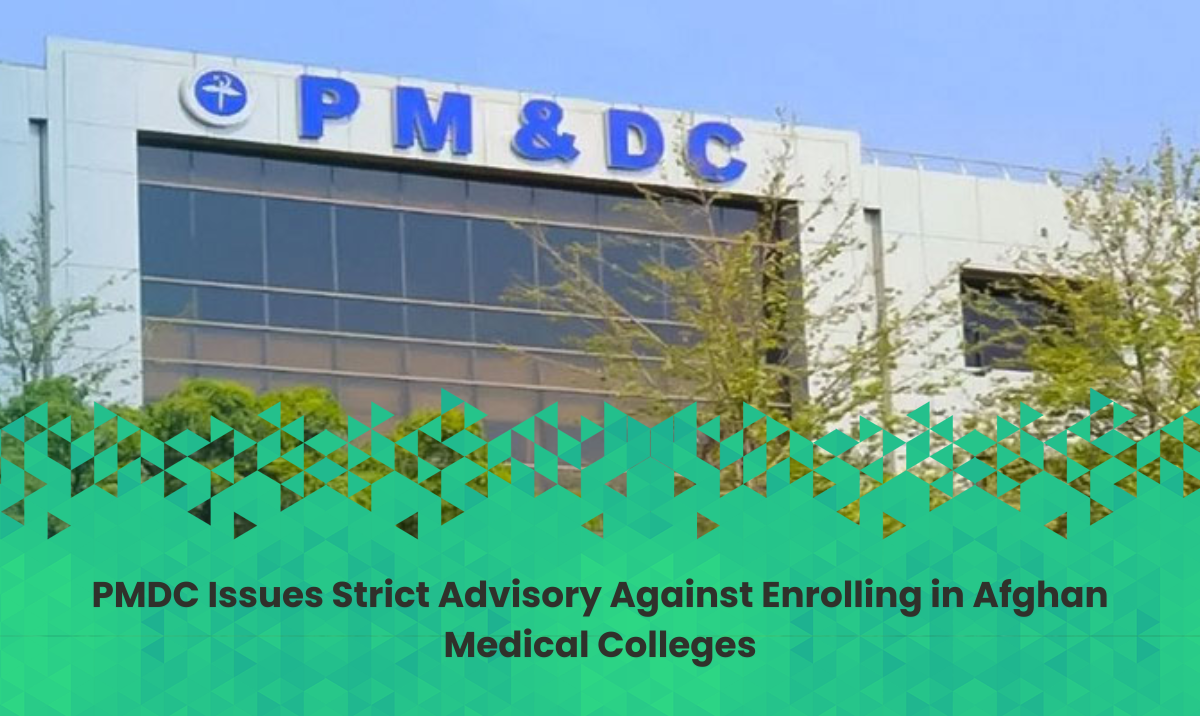
PMDC Issues Strict Advisory for Pakistani Medical Students Regarding Afghan Medical Colleges
The Pakistan Medical and Dental Council (PMDC) has officially issued a critical public warning and advisory for prospective and current Pakistani medical students , strongly advising them against enrolling in medical and dental institutions located in Afghanistan. According to the apex regulatory body, graduates from Afghan medical universities will not be granted registration, licensing, or authorization to practice medicine within Pakistan. This major regulatory update has sparked widespread concern among hundreds of families and students pursuing or planning their higher education across the border.
Understanding the PMDC Directive on Afghanistan Medical Degrees
The core of the PMDC advisory centers on the strict accreditation standards mandated for foreign medical qualifications. The Pakistan Medical and Dental Council stated that medical and dental colleges in Afghanistan do not meet the necessary international and domestic benchmarks required for official recognition.
Under the updated policy guidelines, any Pakistani student seeking to study medicine abroad must ensure that their chosen institution is duly recognized and listed under internationally accepted frameworks, prominently including the Educational Commission for Foreign Medical Graduates (ECFMG) directory. Because Afghan institutions are absent from these required listings, the regulator has clarified that degrees obtained from these establishments will be deemed invalid for professional practice in Pakistan.
Key Highlights of the PMDC Warning:
-
No Professional Registration: Graduates holding degrees from Afghan medical and dental institutions cannot register with the PMDC .
-
Ineligibility for Licensing Exams: Affected individuals are barred from sitting for the mandatory National Registration Examination (NRE) , which is a mandatory prerequisite to obtain a full medical license in Pakistan.
-
Zero Exemptions: The council has confirmed that no special approvals, leniency, or retrospective exemptions will be considered for students currently enrolled or planning to seek admission.
Why Students Chose Afghan Medical Institutions
Over the past several years, a significant number of Pakistani medical students —particularly those hailing from the Khyber Pakhtunkhwa province and bordering regions—have crossed the border to pursue a Doctor of Medicine (MD) or equivalent degrees in Afghanistan.
Several driving factors contributed to this trend:
-
Affordability: Tuition fees and overall living expenditures in Afghanistan are considerably lower compared to private medical colleges inside Pakistan or alternative foreign study destinations like Central Asia, China, or Eastern Europe.
-
Geographic Proximity: The close distance allows students to remain relatively near their families.
-
Admission Competition: Securing a seat through the highly competitive national MDCAT framework within Pakistan is notoriously difficult, leaving thousands of pre-medical high achievers looking for accessible alternatives abroad.
Student representative bodies and local welfare societies have argued that thousands of Pakistani scholars have historically invested substantial financial resources and critical years of their lives into these programs.
Legal Battles and Ongoing Contention
The issue of medical degree recognitions from neighboring Afghanistan has witnessed a turbulent legal history. Previously, courts—including the Peshawar High Court—intervened to protect the rights of certain batches of graduates, setting aside retrospective applications of regulatory delisting notifications for students who had already completed their education under prior frameworks.
Despite judicial interventions involving specific petitioner groups, the PMDC has maintained a firm stance, issuing comprehensive updates to streamline foreign education compliance. The council emphasizes that safeguarding domestic healthcare standards and ensuring public safety requires rigorous adherence to uniform educational criteria. Legal experts note that further challenges remain sub judice across higher judicial forums as affected student organizations continue to push for protective relief and transitional policies.
Impact on Current Students and Career Uncertainty
The latest advisory places thousands of active Pakistani medical students in a state of profound academic and professional limbo. Students currently midway through their programs face a difficult crossroads: continuing their education risks yielding an unrecognisable degree that holds zero professional value back home, while transferring credits to alternative, approved foreign or domestic institutions presents steep financial and bureaucratic hurdles.
Education advisors and career counselors are urging parents and aspiring applicants to exercise extreme caution. Before committing financial resources to any international university, students must thoroughly cross-reference institutional accreditation lists directly via official government portals like the PMDC website and international directories.
PMDC Guidelines for Studying Abroad
To prevent future complications, the Pakistan Medical and Dental Council has repeatedly outlined mandatory prerequisites for anyone pursuing medicine outside Pakistan:
-
Pre-Qualification Marks: Students must achieve mandatory percentages in intermediate (F.Sc Pre-Medical) or equivalent international exams like SAT-II/MCAT.
-
Mandatory Student Registration: Securing a free-of-cost PMDC Student Registration Certificate via their online portal prior to leaving the country is compulsory.
-
Curriculum Compliance: The foreign degree program must span a minimum of five years, encompassing at least 6,200 study hours and strict attendance thresholds.
-
Global Recognition Directory: The target university must hold active validation status under internationally recognized bodies such as the ECFMG.






Share your comments & questions here
No comments yet. Be the first to comment!