
 Home
 National
 International
 Merit list
 Date Sheet
 Result
 Admission
 Study Abroad




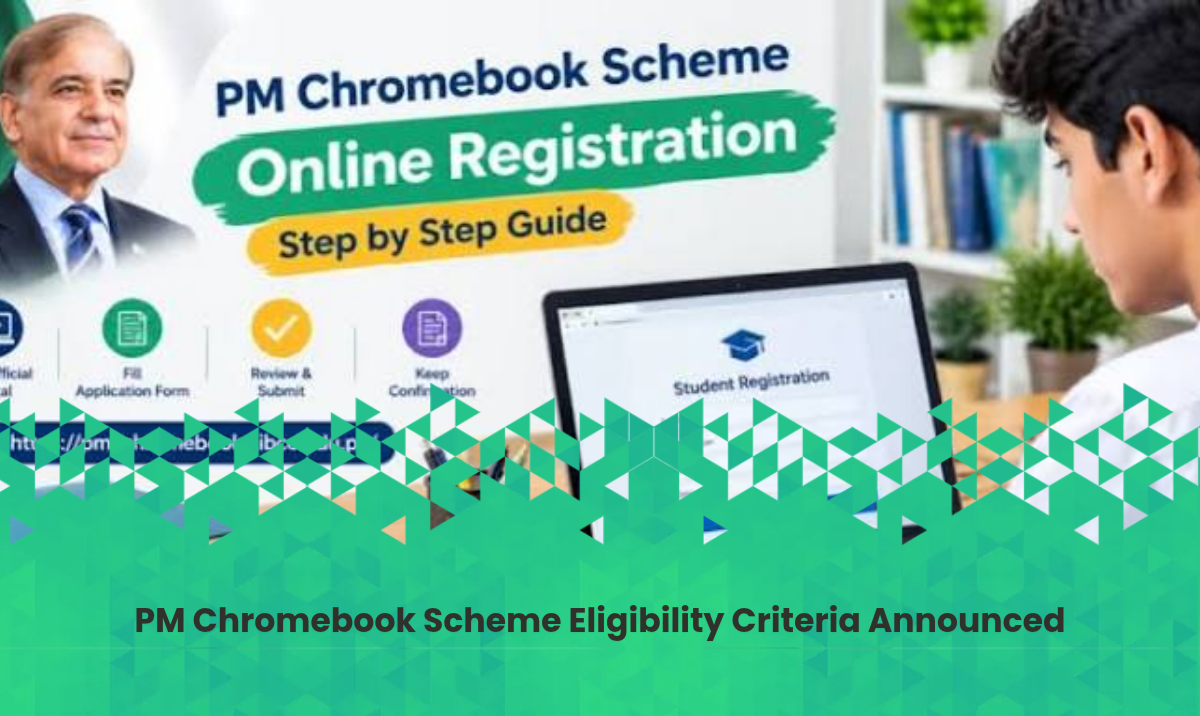
Prime Minister’s Youth Chromebook Scheme 2026: Complete Eligibility Criteria, Quota Distribution, and Registration Guidelines
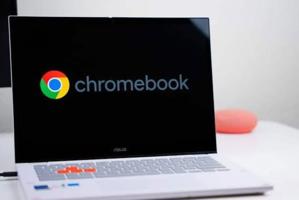
The federal government of Pakistan has officially rolled out the comprehensive eligibility framework and province-wise breakdown for the much-anticipated Prime Minister’s Youth Chromebook Scheme. Aimed at boosting digital literacy, empowering high-achieving youth, and bridging the technological divide in classrooms, this major initiative will distribute 500,000 refurbished Chromebooks to deserving and hardworking students across the country.
Jointly spearheaded by the Ministry of Federal Education and Professional Training and the Prime Minister’s Youth Program, the project features a strategic partnership with the TT Care Foundation, which has officially committed to supplying the digital devices under a formal letter of understanding.
Whether you are a matriculation student studying under a regional board, a parent tracking educational opportunities, or an academic mentor guiding young scholars, here is everything you need to know about who qualifies for the laptop scheme, how quotas are distributed, and what steps are being taken to ensure absolute transparency.
Key Highlights of the PM Chromebook Scheme
-
Total Devices: 500,000 high-quality refurbished Chromebooks.
-
Target Audience: High-performing Grade 9 and SSC-I students.
-
Minimum Academic Requirement: At least 50% marks in the latest exams.
-
Collaborating Bodies: Ministry of Federal Education, PM Youth Program, and TT Care Foundation.
-
Verification Authority: Inter Boards Coordination Commission (IBCC).
-
Delivery Mechanism: Direct courier delivery paired with an automated tracking and grievance redressal system.
Detailed Eligibility Criteria: Who Can Apply?
To ensure that public assets reach the most deserving candidates without bias, the federal government has set strict eligibility parameters. Students wishing to benefit from the initiative must meet the following mandatory benchmarks:
-
Academic Merit: Applicants must have secured a minimum of 50% marks in their recent Secondary School Certificate (SSC-I) or Grade 9 examinations.
-
Institutional Affiliation: The scheme is open to students enrolled in:
-
Public/Government high schools across Pakistan.
-
Private schools that are officially registered and supported by provincial education foundations.
-
Registered religious seminaries (Madaris).
-
-
Verification Process: All submitted records, marks, and student enrollments will go through a rigorous cross-verification filter managed by the Inter Boards Coordination Commission (IBCC) in collaboration with respective educational boards before final dispatch.
Province-Wise Quota and Regional Distribution
To maintain fair representation across all administrative tiers, the 500,000 Chromebooks have been allocated based on regional demographics and student enrollment statistics. The breakdown is structured as follows:
-
Punjab: 181,090 devices
-
Sindh: 85,925 devices
-
Khyber Pakhtunkhwa (KP): 51,170 devices
-
Balochistan: 31,815 devices
-
Islamabad Capital Territory (ICT): 100,000 devices
-
Azad Jammu and Kashmir (AJK): 25,000 devices
-
Gilgit-Baltistan (GB): 25,000 devices
Institutional and Stream-Based Allocation Breakdown
Within each regional and provincial quota, the government has defined a structured distribution formula to balance mainstream schooling, religious education, and academic disciplines:
-
School vs. Madaris Split: Out of the total regional allocation, 80% of devices are reserved for school students, while 20% are allocated specifically for students enrolled in registered madaris.
-
Academic Stream Distribution (Schools): To encourage core science education while supporting arts, the school share is further divided:
-
70% of devices are earmarked for students enrolled in Science streams.
-
30% of devices are designated for students in Arts and Humanities streams.
-
Ensuring Transparency: Delivery, Monitoring, and Grievance Redressal
Past digital distribution programs often faced criticism regarding transparency and logistical bottlenecks. To counter these challenges, the federal administration has engineered a watertight implementation strategy for the Chromebook initiative:
-
Direct Courier Dispatch: Once vetted through the IBCC and local education departments, Chromebooks will be shipped securely via trusted courier services directly to verified recipients or designated institutional points.
-
Advanced Monitoring Framework: A dedicated digital dashboard will track every single device from the warehouse to the student's hands, preventing mishandling or unauthorized substitutions.
-
Grievance Redressal Committees: Special regional and provincial complaint cells are being established to instantly address student grievances regarding merit calculation errors, verification delays, or delivery discrepancies.
Frequently Asked Questions (FAQs)
Question: What is the minimum percentage required to qualify for the PM Chromebook Scheme?
Answer: Students must achieve at least 50% marks in their latest Grade 9 / SSC-I board examinations to be eligible for selection.
Question: Are private school students eligible for free Chromebooks?
Answer: Yes, students studying in private institutions that are officially registered with provincial education foundations can apply, alongside public school students and registered madaris pupils.
Question: Who is responsible for verifying the academic records of applicants?
Answer: The Inter Boards Coordination Commission (IBCC), working alongside respective provincial education boards, is tasked with authenticating student results and school affiliations.
Question: How will the Chromebooks be delivered to selected students?
Answer: Verified candidates will receive their devices securely through registered courier services, supported by a live digital tracking and monitoring system.