




 Home
Home
 National
 International
 Merit list
 Date Sheet
 Result
 Admission
 Study Abroad


.jpg)
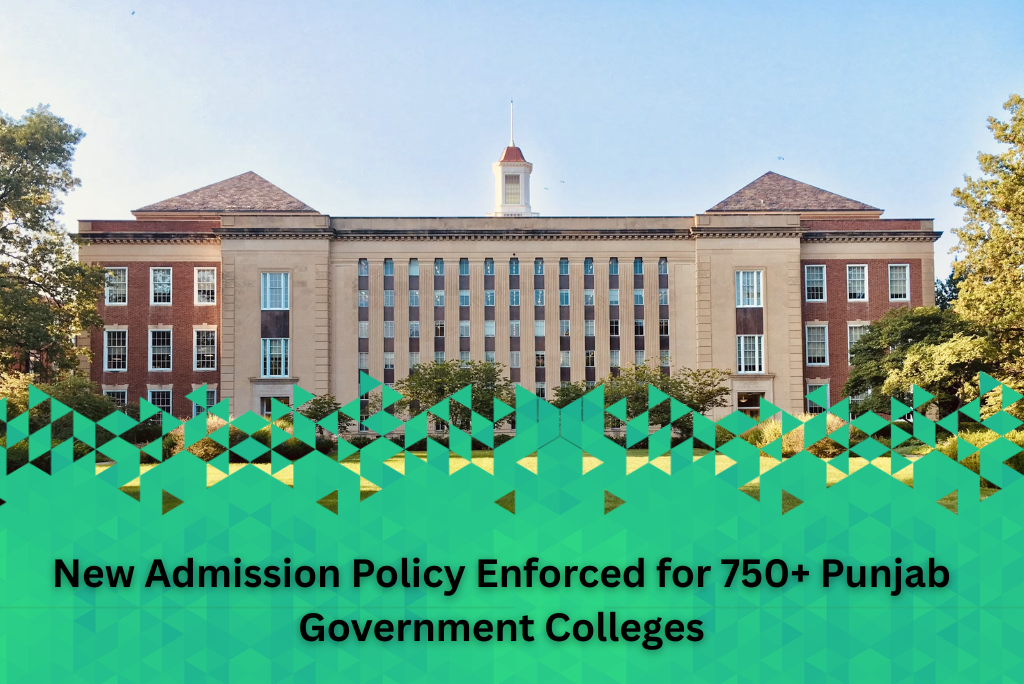
New Enrollment Caps Imposed on 750+ Punjab Colleges
In a significant administrative shift that will reshape the upcoming academic session, the provincial administration has announced structural changes to the Punjab government college admission policy . Acting on a formal directive issued by the Directorate of Public Instruction Colleges (DPI Colleges Punjab), the government has officially scaled down the provincial college admission growth target for the current academic year, slicing it from an ambitious 20 percent down to a controlled 10 percent.
The structural policy revision is set to take immediate effect, binding more than 750 government colleges in Punjab to a new set of regulatory enrollment limits during this ongoing admission cycle. Education experts and provincial planners indicate that the sudden policy shift is designed to ease the extreme structural burden currently weighing down public educational infrastructure across Punjab, ensuring that quality of education is prioritized over sheer student volume.
Direct Impact on Over 750 Higher Education Institutions
The operational directive affects every single public sector intermediate and degree college operating within the province's division boundaries. By altering the entry caps, the provincial administration aims to establish an equilibrium between student enrollment and the available resources, including faculty strength, classroom space, and laboratory facilities.
According to institutional data, public sector institutions have faced unprecedented enrollment spikes over the last three years. The previous 20 percent annual expansion strategy placed an immense logistical strain on campuses. By lowering the mandatory growth benchmark to 10 percent, the Directorate of Public Instruction Colleges aims to stabilize classroom sizes, though this will inevitably make securing a seat at premier public institutions highly competitive.
Why the Punjab Government Altered Course
Insiders within the Higher Education Department (HED) Punjab point out that the change in the Punjab government college admission policy is a calculated response to several operational challenges:
-
Faculty Shortages: Many government colleges in Punjab have been working with thin teaching ratios, relying heavily on temporary College Teaching Interns (CTIs) to bridge massive instructional gaps.
-
Physical Infrastructure Deficits: Expanding student capacity by one-fifth every year required rapid infrastructural spending that simply could not keep pace with the influx of students, leading to overcrowding in lecture halls.
-
Academic Quality Control: Bloated classroom sizes have historically correlated with dipping passing percentages in board examinations, prompting a strategic return to stricter quality controls.
The regional implementation of this policy directive is being monitored directly by Divisional Directors and District Deputy Directors of Colleges. The DPI Colleges office has clarified that any public institution exceeding the newly designated 10 percent growth threshold without express prior authorization from the department will face strict administrative inquiries.
College principals have been directed to optimize their current infrastructure allocations immediately. Admission committees within each campus are reshaping their intake algorithms to filter applicants strictly through pure academic merit, eliminating informal flexibilities that existed under the broader 20 percent target ecosystem.
This policy pivot marks a clear transition for Punjab higher education updates , steering the system away from purely volume-driven access models toward localized asset sustainability. Students and parents are heavily advised to track institutional updates carefully as colleges begin rolling out their specific calculated quotas in accordance with the revised provincial mandate.






Share your comments & questions here
No comments yet. Be the first to comment!