


 Home
Home
 National
 International
 Merit list
 Date Sheet
 Result
 Admission
 Study Abroad
.jpg)


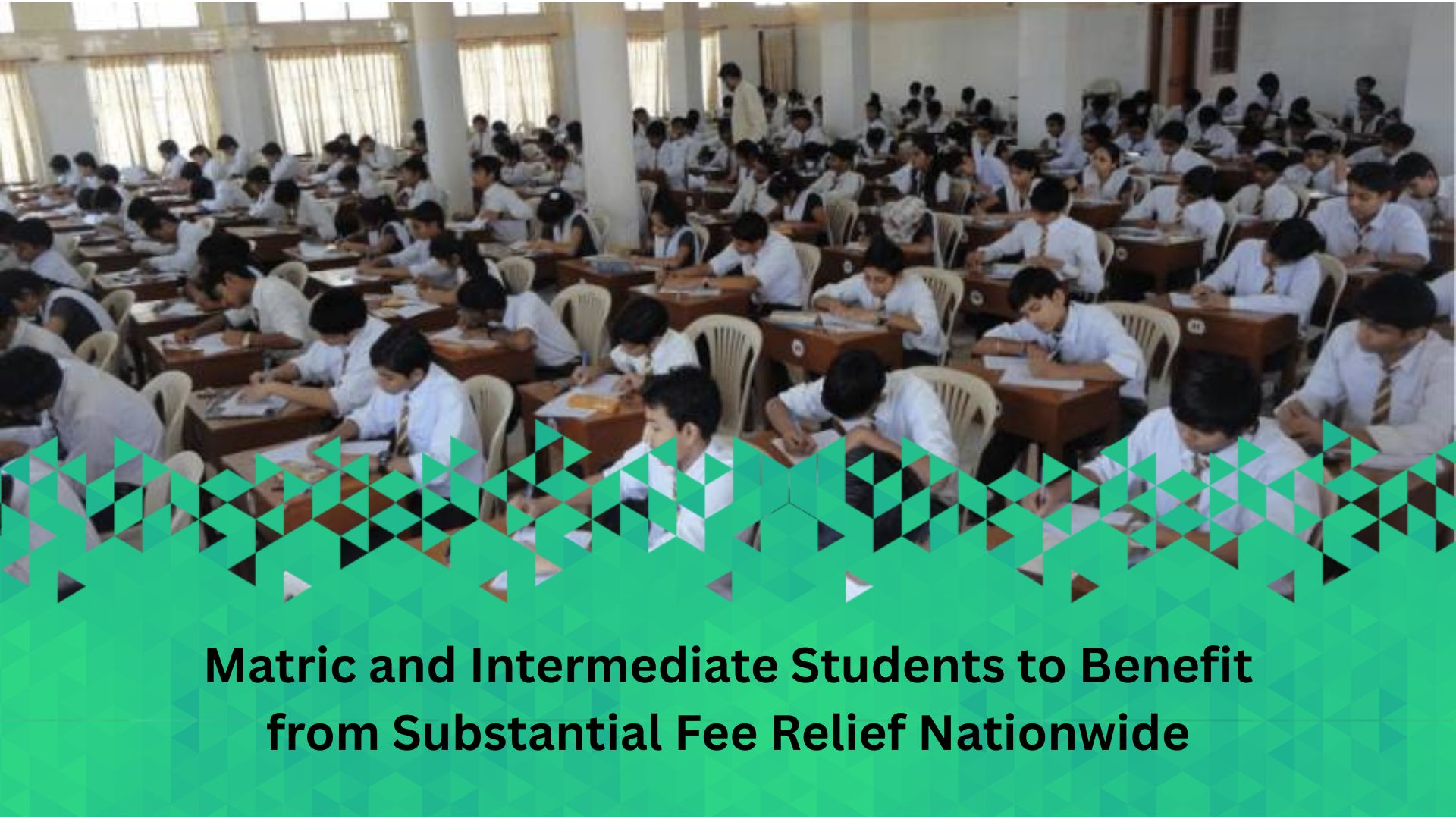
Major Fee Relief Announced for Matric and Intermediate Students Across Pakistan
In a landmark decision set to alleviate financial pressure on millions of students and families, the Inter Board Coordination Commission (IBCC) has announced sweeping fee relief for matriculation and intermediate students across Pakistan . The reform consolidates the verification process for academic documents into a single, reduced fee, marking a significant shift from the previous, more costly system.
Streamlined Verification Process Slashes Costs
The core of the new policy mandates that all educational boards under the IBCC’s purview will now verify a student’s result card and certificate concurrently for one combined fee . This move eliminates the previous requirement where certificate holders were forced to pay separate, distinct fees for the verification of each document a process widely criticized as redundant and financially burdensome.
An official notification from the IBCC has been formally dispatched to all educational boards, instructing them to implement the revised mechanism immediately. The directive applies universally, covering not only all nine boards in Punjab including the Board of Intermediate & Secondary Education (BISE) Lahore but also every provincial and federal board across Pakistan.
Aiming to Ease Financial and Administrative Burdens
IBCC officials estimate that millions of candidates who apply for document verification annually for purposes such as higher education admissions, overseas applications, and employment will benefit directly from this decision.
“The dual-fee structure was an archaic hurdle,” stated a senior IBCC official familiar with the policy development. “This reform achieves two primary objectives: it significantly reduces the financial burden on students, particularly those from economically challenged backgrounds, and it streamlines the administrative process, making it more efficient and user-friendly. We expect it to facilitate smoother transitions for students pursuing further opportunities.”
The exact monetary saving per student will vary slightly between boards, as each sets its own fee schedules. However, early estimates suggest students could save between 30% to 50% of the total cost they would have incurred under the old two-tiered fee system. For a family with multiple students, these savings are substantial.
Nationwide Impact and Positive Reactions
The nationwide scope of the policy ensures equitable relief. Whether a student is from BISE Karachi, BISE Peshawar, BISE Quetta, or any board in Punjab like Lahore, Multan, or Gujranwala, the single-fee verification rule will apply uniformly.
Education advocates and student unions have welcomed the announcement. “This is a pragmatic and much-needed step,” said Ayesha Raza, President of a Lahore-based student welfare association. “The cumulative cost of verification for certificates and cards separately was a hidden expense that strained budgets. The IBCC’s decision recognizes and addresses a genuine pain point in our academic system.”
The policy is also expected to reduce processing times. With a unified verification procedure, board officials can handle the documents as one package, potentially speeding up service delivery a critical factor for students facing university or job application deadlines.
Looking Forward: Implementation and Awareness
The success of this policy now hinges on effective implementation and public awareness. The IBCC has instructed boards to update their fee structures and publicize the change on their official websites and notice boards. Students applying for verification in the coming weeks are advised to confirm the new combined fee with their respective boards to ensure they are not overcharged.
This reform is seen as part of a broader push to modernize Pakistan’s educational administrative framework. By reducing financial barriers and simplifying bureaucratic processes, the IBCC aims to foster a more accessible and efficient environment for the country’s student population, empowering them in their academic and professional pursuits.