




 Home
Home
 National
 International
 Merit list
 Date Sheet
 Result
 Admission
 Study Abroad


.jpg)
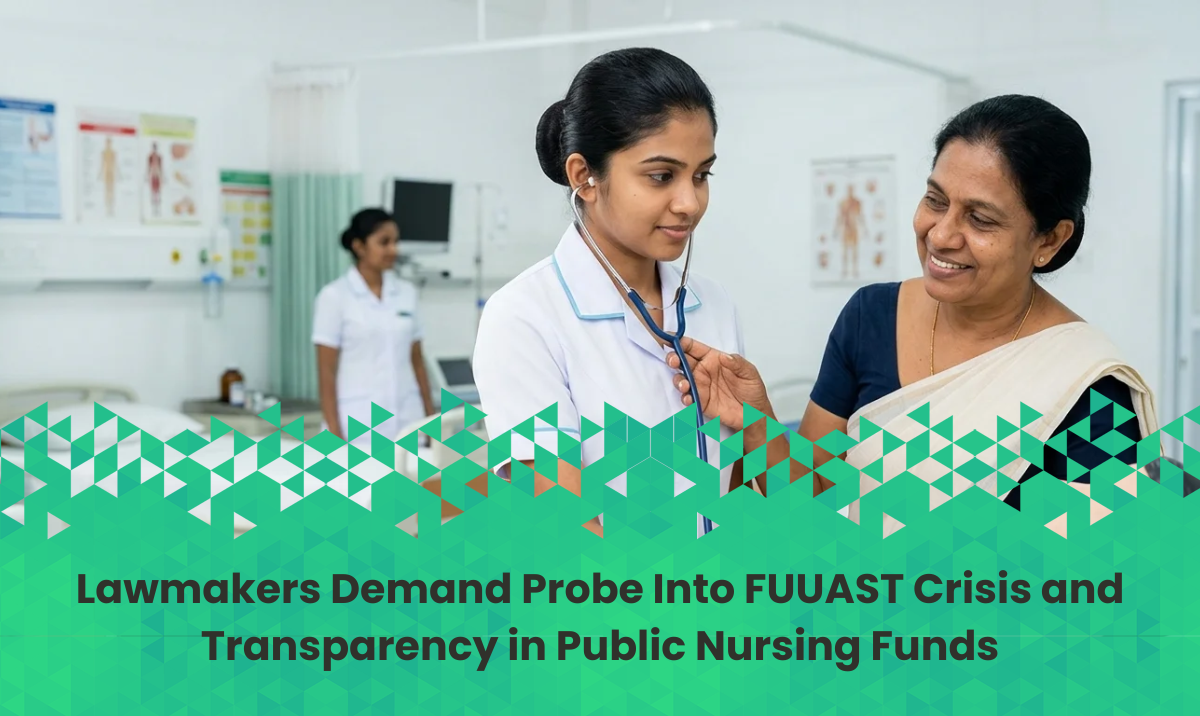
Lawmakers Demand Transparency in Govt-Funded Nursing Training Program and Probe FUUAST Crisis
The National Assembly Standing Committee on Education has launched a rigorous scrutiny into the transparency of a multi-million rupee government-funded nursing training project , while simultaneously demanding immediate answers regarding a severe, ongoing FUUAST administrative collapse .
The high-level parliamentary meeting, convened at Parliament House, was presided over by acting chairperson Mahtab Akbar Rashdi . The committee expressed deep concerns over public sector spending, institutional governance, and the apparent lack of merit-based execution in federal initiatives. Lawmakers formally directed the National Vocational and Technical Training Commission (NAVTTC) to submit an exhaustive framework regarding its latest international training ventures.
Lawmakers Question NAVTTC Over Nursing Training Program
At the heart of the committee’s inquiry is the NCLEX Nursing Training Programme , a state-funded initiative designed to prepare registered Pakistani nurses for international licensure and overseas employment. While the educational merit of upgrading healthcare skills was not disputed, the National Assembly Standing Committee on Education raised serious questions about how the project is being managed behind closed doors.
During the briefing, it was revealed that approximately Rs. 300,000 is being spent on each trainee from the public exchequer. With 500 slots allocated for the initial phase, the total expenditure represents a massive layout of state funds. Committee members expressed absolute dissatisfaction upon learning that the highly lucrative opportunity had not been publicly advertised . Instead, candidates were selected via internal nominations by the Pakistan Nursing Council (PNC).
Acting chairperson Mahtab Akbar Rashdi and other committee members observed that bypassing public advertisement directly compromises the principles of meritocracy and equal opportunity for healthcare professionals across the country. Consequently, the panel has directed NAVTTC to furnish comprehensive details regarding:
-
The criteria utilized to select the International Center for Skills (ICS) as the primary implementing partner.
-
The exact baseline metrics used for candidate nominations.
-
The overarching legal and operational implementation framework of the program.
Crisis at Federal Urdu University (FUUAST) Deepens
Shifting focus to higher education, the parliamentary committee turned its attention to the institutional decay at the Federal Urdu University of Arts, Science and Technology (FUUAST) . Lawmakers lambasted the university’s leadership for allowing a persistent FUUAST administrative collapse to paralyze the daily functions of the campuses.
The committee was briefed on an acute financial crisis within the university, which has led to prolonged delays in issuing salaries and pensions to faculty members, active staff, and retired employees. This systemic delay has sparked immense employee grievances, frequent protests, and disrupted academic schedules.
Expressing anger over the lack of urgency displayed by the university's management, the committee announced it would bypass further verbal assurances. The body is issuing a detailed, legally binding questionnaire through the Ministry of Federal Education and Professional Training to investigate the depth of FUUAST’s financial, governance, and administrative mismanagement.
Regulatory Overhaul: IBCC Equivalence System Reviewed
Beyond institutional investigations, the National Assembly Standing Committee on Education conducted a structural assessment of foreign educational integration. The Inter Board Coordination Commission (IBCC) presented a detailed overview of its regulatory framework regarding foreign Qualification Awarding Bodies (QABs) operating within Pakistan.
|
Regulatory Focus Area |
Key Implementation Metric |
Statutory Framework |
|
Grade Equivalence |
Conversion of Cambridge O/A Levels to SSC/HSSC |
IBCC Act, 2023 |
|
Quality Control |
15 Mandatory Standards (Governance, Integrity) |
IBCC Regulatory Committee |
|
Institutional Approval |
Conditional registration of Cambridge International Education |
Mandatory localized compliance |
The IBCC briefed lawmakers on the standardized systems used to convert Cambridge O and A-level grades into local Secondary School Certificate (SSC) and Higher Secondary School Certificate (HSSC) equivalents. Operating under the statutory authority of the IBCC Act, 2023 , the commission has enforced 15 strict regulatory standards covering curriculum alignment, legal compliance, and examination integrity.
Crucially, the Regulatory Committee recommended the formal registration of Cambridge International Education as an approved QAB in Pakistan, subject to absolute compliance with local institutional guidelines.







Share your comments & questions here
No comments yet. Be the first to comment!