


 Home
Home
 National
 International
 Merit list
 Date Sheet
 Result
 Admission
 Study Abroad
.jpg)


In a great move to digitize academic credentialing and eradicate the menace of fake degrees, the HEC has officially launched a transformative blockchain-based Degree Attestation System . This radical shift will permanently change how students, employers, and foreign universities verify academic qualifications in Pakistan.
The new system, developed in partnership with CMPak (Zong) and Wibbow Technologies, promises to eliminate the decades-long hassle of physical document requests, long queues at HEC offices, and the cumbersome paper-based documentation process. While the service is currently in a transitional phase, HEC has confirmed that the digital platform will be fully operational for all users across the country by June 30th, 2026 .
A Seamless Digital Workflow
The legacy system often required graduates to physically travel to regional centers, such as the HEC degree attestation Lahore office, leading to delays and logistical nightmares. The new framework centralizes the entire process online.
According to the official blueprint, the new digital attestation workflow is structured into five streamlined steps:
-
Registration: Users must register at the official HEC portal (eservices.hec.gov.pk) and complete their academic profile.
-
Uploading: Graduates are required to upload their degrees and transcripts starting from Matriculation onwards to create a comprehensive digital record.
-
University Verification: Linked universities will verify the uploaded records via a dedicated dashboard before forwarding them to HEC.
-
Blockchain Storage: Once verified by the HEC, the degrees are added to a secure, tamper-proof blockchain, ensuring data integrity.
-
Instant Verification: Employers and international authorities can instantly view these credentials without needing physical copies.
Key Features of the 2026 System
1. Integration with the Foreign Office
One of the most significant pain points for students seeking employment abroad has been the dual verification process (HEC followed by the Foreign Office). The new blockchain infrastructure will link HEC directly with the Foreign Office, creating a seamless digital pathway for graduates. Once fully implemented, a single digital verification will serve both domestic and international requirements.
2. Security and Anti-Forgery Measures
The use of blockchain technology makes the records immutable. This means that once a degree is uploaded and verified, it cannot be altered or forged. For employers conducting an HEC degree verification check , the system will provide an instant "Yes/No" confirmation regarding the authenticity of a candidate’s claims.
3. Accessible Support and Login
To assist students during this transition, the HEC has strengthened its support infrastructure. Students facing issues with the HEC degree attestation login or the uploading process can now reach out via the dedicated HEC Degree attestation helpline , which will remain active throughout the transition period ending in 2026.
How to Verify a Degree Today
Even as the system transitions, students and employers can still access existing services. If you need a current HEC online verification status for a degree issued before the blockchain rollout, you can use the standard HEC degree verification number assigned to each attested document. However, by June 2026, these numbers will be fully integrated into the blockchain ledger for instant global access.
Understanding the Financial Aspects (2026)
With the digital shift, many prospective graduates are asking about the HEC degree attestation fee 2026 . While the final fee structure for the blockchain-based attestation is yet to be formally notified, HEC has indicated that the service will remain cost-effective. Currently, the standard HEC degree attestation fee for domestic use and foreign attestation varies by urgency.
Officials suggest that the digital system will likely reduce processing costs due to the elimination of paper and physical storage. It is expected that the fee for HEC degree attestation online services will remain competitive with current rates, though a final schedule will be released closer to the June 2026 deadline.
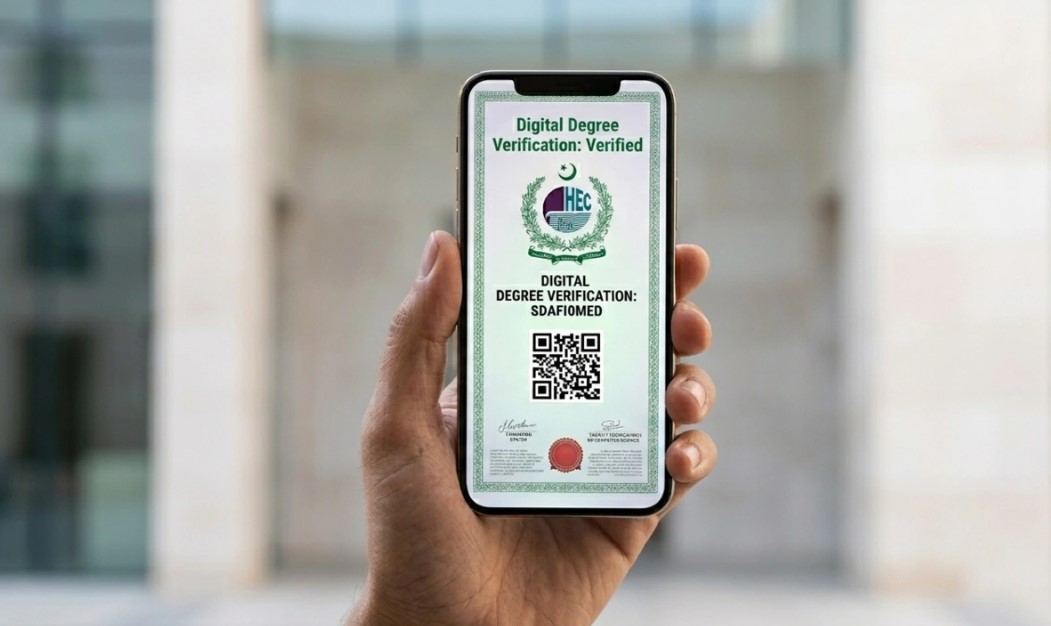
Partnership with Zong and Wibbow
The technical backbone of this system is supported by CMPak (Zong) and Wibbow Technologies. Zong provides the high-bandwidth, secure data infrastructure required to host a national academic blockchain, while Wibbow Technologies brings expertise in document management and digital ledger integration. This public-private partnership is expected to ensure that the system does not crash under heavy load during peak verification seasons (e.g., university admission cycles or job recruitment drives).
A Look Ahead
As the June 30, 2026, deadline approaches, HEC advises all current students and recent graduates to complete their profiles on the new HEC portal as soon as possible. The Commission expects that by the end of the transitional phase, physical degree attestation will become obsolete.
"This is a watershed moment for Pakistan's higher education governance," said an HEC official familiar with the matter. "We are moving from a reactive, paper-heavy verification model to a proactive, instant digital trust model. Whether you are a student in Karachi, an employer in Lahore, or a university in the UK, the answer to an HEC degree verification check will be just a click away."
For now, graduates are encouraged to monitor the official HEC website for updates regarding the HEC degree attestation login credentials and the final fee structure for the blockchain service. The future of Pakistani degree verification is digital, secure, and just over the horizon.