

 Home
Home
 National
 International
 Merit list
 Date Sheet
 Result
 Admission
 Study Abroad
.jpg)


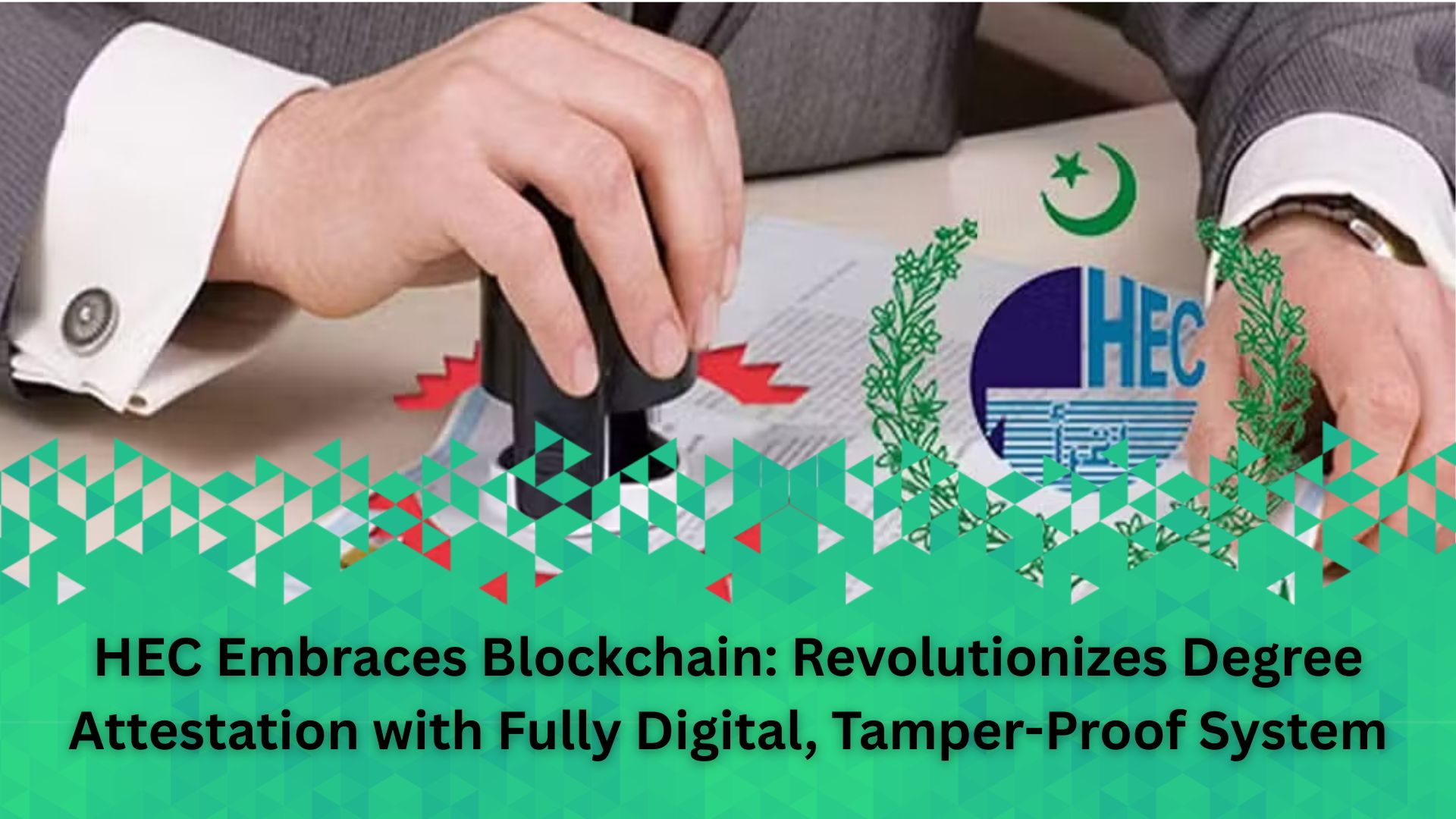
HEC Embraces Blockchain: Revolutionizes Degree Attestation with Fully Digital, Tamper-Proof System
In a landmark move set to transform Pakistan’s academic landscape, the Higher Education Commission (HEC) has finalized a groundbreaking project to overhaul its degree attestation process by integrating blockchain technology . The initiative, slated for full operational launch within the next six months, promises to bring unprecedented efficiency, security, and transparency, fundamentally eliminating the need for applicants’ physical presence and paper-based documentation.
The announcement came following a critical briefing to the HEC’s acting Chairman, Mr. Nadeem Mahbub, who has directed the concerned teams to prioritize the system’s earliest implementation. With the procurement phase for system development already completed, the technical rollout is now in its final stages.
A Paradigm Shift in Academic Verification
For decades, graduates in Pakistan have navigated a cumbersome, time-intensive process for degree attestation—a critical requirement for higher education abroad, employment, and immigration. The traditional system involved submitting physical documents, in-person visits to HEC offices, manual stamping, and lengthy waiting periods, often susceptible to delays and logistical challenges.
The new blockchain-based system is designed to dismantle these barriers entirely. “This transition will make the attestation process fully paperless, automated, and transparent, removing the need for manual stamping or physical documentation,” a senior HEC official confirmed. The core objective is to create a seamless, user-centric experience that instantly verifies academic credentials with unimpeachable integrity.
Two-Track Integration for Maximum Efficiency
The HEC has outlined a smart, two-pronged approach for integrating degrees into the new secure ecosystem:
-
For Graduates of Advanced Institutions: Students from the 25 Higher Education Institutions (HEIs) that have fully implemented the Enterprise Resource Planning (ERP) system will experience the most automated pathway. Their academic information will be automatically integrated into the HEC blockchain upon graduation. “Graduates from these institutions will not need to submit any documents; their degrees will be added to the HEC blockchain upon graduation, enabling access to verified degrees directly through the Portal,” the briefing revealed.
-
For Other Universities: For students graduating from HEIs without a full ERP system, the process will still be largely digitized. They will upload their degrees and transcripts online via the HEC portal. These documents will then be forwarded to a dedicated dashboard for their respective university. After verification and approval by the university authorities, the credentials will be permanently integrated into the blockchain.
The Power of Blockchain: Instant and Tamper-Proof Verification
The choice of blockchain technology is central to the system’s promise. Blockchain acts as a decentralized, immutable digital ledger. Once a degree is recorded on it, the data cannot be altered, forged, or deleted. This creates a permanent, trustworthy record of academic achievement.
The benefits for all stakeholders are profound:
-
For Graduates: They gain instant, lifelong access to their verified degrees through a secure portal. The need for costly, repeated attestations for different purposes is eliminated.
-
For Employers & Government Agencies: Government departments, the Foreign Office, embassies, and private organizations can authenticate a degree’s validity in real-time with the applicant’s consent. This drastically reduces fraud, streamlines hiring, and accelerates bureaucratic processes like visa issuance.
-
For Universities: It reduces the administrative burden of manual verification requests and elevates the global credibility of their awarded qualifications.
Leadership’s Vision for a Digital Future
Acting Chairman Mr. Nadeem Mahbub’s directive to fast-track the project underscores HEC’s commitment to digital innovation and governance reform. “The integration of blockchain is not just a technological upgrade; it is a step towards restoring absolute trust in our academic certifications on a global stage,” an HEC spokesperson stated. “It aligns with the broader national goal of promoting e-governance and enhancing Pakistan’s competitiveness in the international education and employment markets.”
The move is also expected to significantly reduce the commission’s carbon footprint by going completely paperless, contributing to environmental sustainability goals.

Looking Ahead: Implementation and Impact
With the six-month countdown begun, the HEC’s IT and attestation departments are working on final integration, stakeholder training, and public awareness campaigns. The success of the system will hinge on robust collaboration with all Pakistani universities to ensure smooth data transition and verification protocols.
Once live, Pakistan will join a pioneering group of nations leveraging blockchain for educational credentialing, setting a new standard for the region. The initiative is poised to alleviate a major pain point for millions of Pakistani students and professionals, fostering mobility, opportunity, and confidence in the nation’s higher education credentials.
In conclusion, the HEC’s blockchain revolution marks the end of the era of physical degree attestation. By harnessing cutting-edge technology, the commission is building a future where a verified degree is just a secure, digital click away a monumental leap towards transparency and efficiency in Pakistan’s academic administration.