




 Home
Home
 National
 International
 Merit list
 Date Sheet
 Result
 Admission
 Study Abroad



Cambridge Makes U-Turn on Leaked A-Level Maths Paper Grading
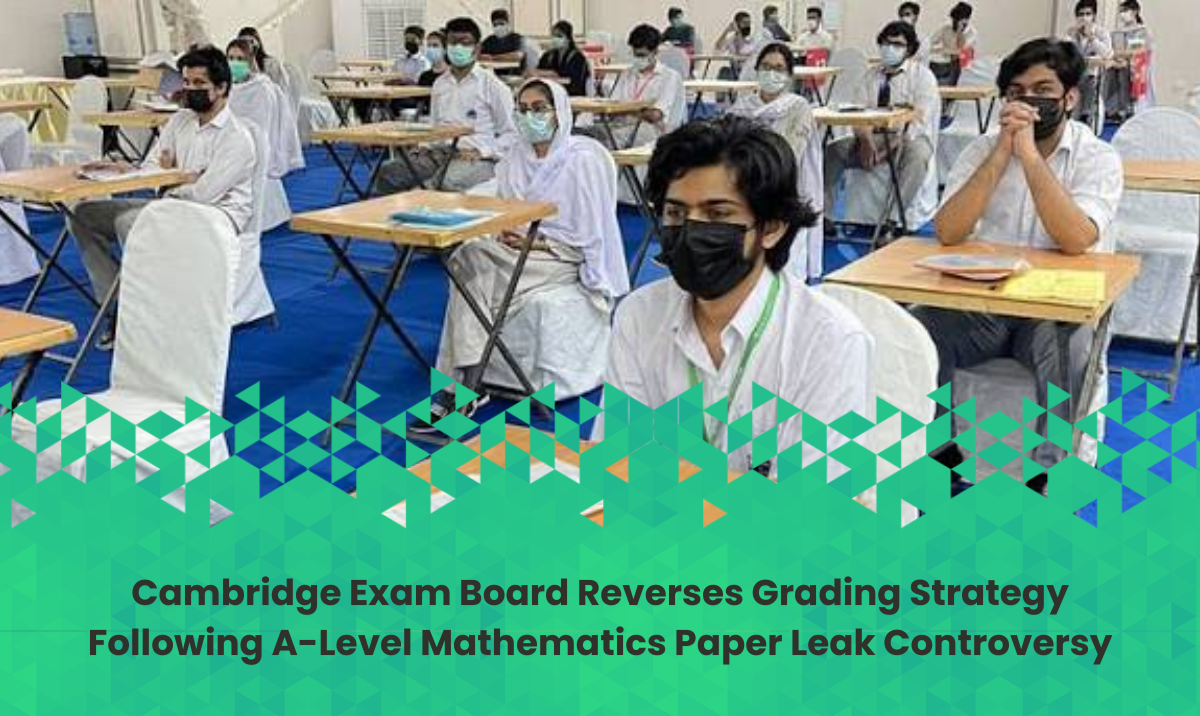
In a dramatic shift that has sent ripples through academic circles, Cambridge International has officially reversed its earlier decision regarding the highly controversial leaked AS & A Level Mathematics Paper 52 (9709/52). The international examination board confirmed in a written communication to affiliated schools that candidates will now be graded based on their original examination scripts rather than the previously announced assessed marks system.
This sudden policy reversal comes after months of intense anxiety, operational disruptions, and rigorous investigations into security breaches that plagued the examination series across South Asia. For thousands of students, parents, and educators, the announcement provides a definitive conclusion to an exceptionally turbulent grading season, though it has left many questioning the consistency of major international assessment bodies.
Background: The Initial Leak and Panic
The controversy surrounding Cambridge International AS & A Level Mathematics Paper 52 (9709/52) began unfolding when reports emerged that confidential test materials had been shared prematurely across messaging applications. Operating within Administrative Zones 3 and 4, which includes countries like Pakistan, the paper was circulated roughly hours before candidates entered the examination halls.
As discussions on social media intensified, Cambridge International launched a formal inquiry into the breach. Recognizing that a security compromise had occurred, the board initially adopted a cautious, protective approach to safeguard the integrity of the qualifications.
In its initial directives, Cambridge announced that Paper 52 would be completely excluded from direct evaluation. Instead, the examination body declared it would utilize its well-established protocol of assessed marks—a method where a student's grade for a compromised component is mathematically estimated using their performance across other completed components within the same syllabus.
While the board maintained that assessed marks were a fair and trusted UK-standard procedure used to neutralize unfair advantages gained by cheating, the decision provoked widespread distress. Many candidates who had diligently studied and sat for the exam felt penalized by a blanket policy that discounted their physical effort in the test center.
The Investigation Findings and the U-Turn
The landscape shifted dramatically just days before the scheduled release of global results. According to the recent communication sent to registered examination centers, senior assessment experts and investigators concluded a comprehensive review of the data surrounding Paper 52.
The board stated that the extended investigation revealed critical nuances regarding the spread of the leak:
-
Limited Visibility: The inquiry found that the leaked material did not achieve significant or widespread visibility among candidates inside Pakistan.
-
Minimal Impact on Performance: Detailed statistical analyses of student responses indicated that the leak did not meaningfully distort or skew overall candidate performance on a macro level.
Because the empirical evidence suggested that the integrity of the general cohort's scores remained largely intact and unaffected by the breach, Cambridge senior leaders opted for a policy reversal. Rather than enforcing the fallback measure of assessed marks, the board confirmed that standard grading protocols would apply, evaluating candidates strictly on their submitted original exam answers.
Student and Institutional Reactions
While the decision to honor original scripts means that students' hard work inside the examination hall will directly count toward their final credentials, the timing of the U-turn has sparked substantial debate.
Throughout the waiting period, rumors and shifting policies created an environment of severe psychological stress. Some candidates admitted that upon hearing initial news of the cancellation and the shift to assessed marks, they approached subsequent preparation or reflection differently, believing the paper would hold no weight.
Educational consultants note that last-minute administrative changes complicate university placement processes. Admissions deadlines rely heavily on predictable, stable grading timelines. When policy positions shift at the eleventh hour, it challenges the operational confidence of both schools and university admissions departments.
Nonetheless, many academic bodies have welcomed the decision to revert to raw scripts where empirical data proves a leak was localized and non-influential, arguing that direct assessment remains the truest reflection of a student's capability.
Broader Implications for Exam Security
The Cambridge Mathematics Paper 52 incident highlights a wider vulnerability facing international examination boards in the digital age. The rapid proliferation of digital messaging networks and online forums has turned test security into a high-stakes cat-and-mouse game.
Throughout the examination series, boards have faced sophisticated, sustained efforts by bad actors attempting to photograph and distribute confidential test materials. At the same time, the rise of fake leaks—where manipulated or entirely fabricated documents are circulated to cause panic—has added layers of complexity to administrative crisis management.
In response to these persistent threats, Cambridge International has emphasized that it is pursuing legal action against perpetrators, collaborating closely with international law enforcement agencies, and working alongside major social media platforms to clamp down on copyright violations and security breaches. The board has reaffirmed that strict sanctions—including permanent disqualification—await anyone found guilty of sharing or utilizing illicit examination content.
Moving Forward
As results are processed under this updated framework, schools affiliated with Cambridge International are adjusting their administrative advisories to support students through the final outcome release.
The reversal on AS & A Level Mathematics Paper 52 (9709/52) serves as a defining case study in how international examination boards balance rigorous academic security with real-world fairness. While the path to this final grading resolution was filled with unprecedented twists, the focus now returns to ensuring that student futures and university admissions proceed smoothly on a fair, transparent playing field.










Share your comments & questions here
No comments yet. Be the first to comment!