


 Home
Home
 National
 International
 Merit list
 Date Sheet
 Result
 Admission
 Study Abroad


.jpg)
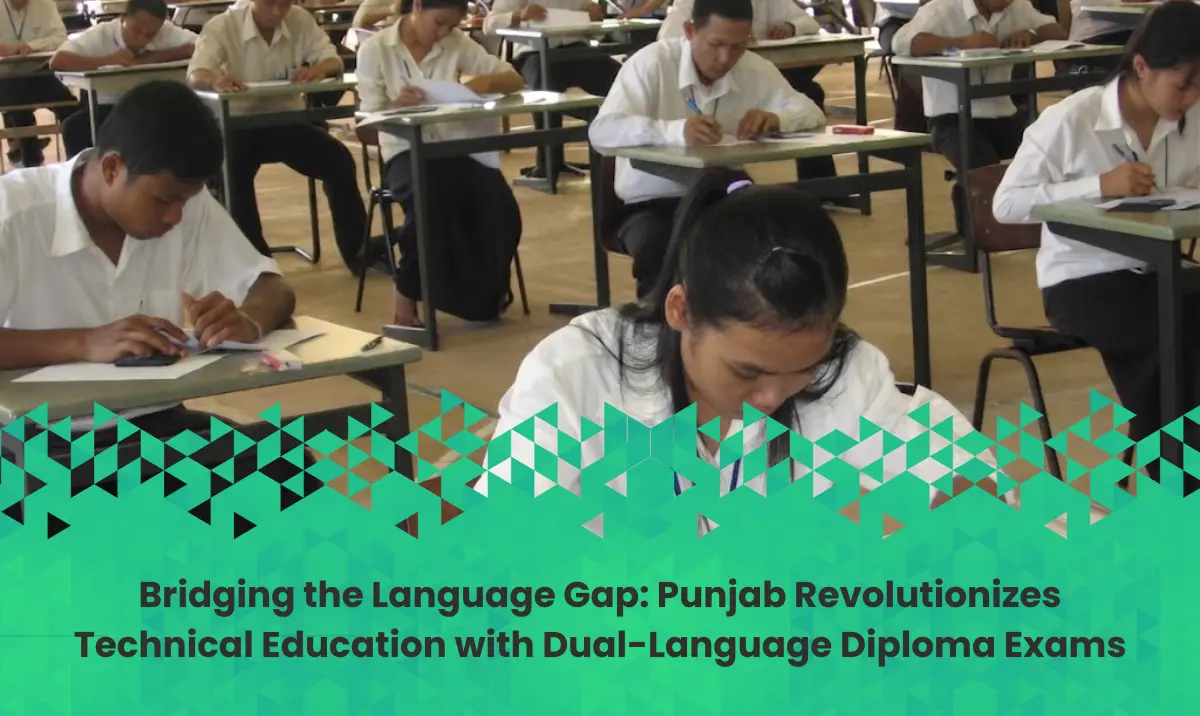
Punjab to Hold Diploma Papers in 2 Languages: A Major Milestone for Technical Education
In a landmark decision aimed at fostering inclusivity and easing academic pressure on students, the Punjab Board of Technical Education (PBTE) has officially announced a revolutionary shift in its examination framework. Moving forward, the board will conduct the two-year Diploma of Information Technology (DIT) examinations in both Urdu and English . This major policy update marks a critical turning point for technical and vocational training across the province, addressing long-standing language barriers that have historically hindered capable students from achieving their full potential.
Transforming the Examination Landscape: Why Bilingual DIT Exams Matter
For decades, technical education curricula—especially in computing, software engineering fundamentals, and information technology—have relied almost exclusively on English instruction and testing. While English remains the global lingua franca of technology, academic experts and board officials noted that rigid linguistic constraints often disadvantaged brilliant minds coming from Urdu-medium educational backgrounds or rural regions.
By introducing DIT exams in Urdu and English , the Punjab Board of Technical Education is bridging a massive accessibility gap. According to senior board representatives, this bilingual format is explicitly designed to make the examination system significantly more convenient, transparent, and effective.
Students enrolled in the two-year Diploma of Information Technology Punjab program will now have the distinct flexibility to read, comprehend, and analyze exam questions in whichever language they feel most comfortable with. Whether a candidate prefers the global technical terminology in English or conceptual clarity through Urdu translation side-by-side, the new framework accommodates diverse learning curves.
Empowering Students to Showcase True Knowledge
The primary motivation behind implementing a bilingual examination model for the Diploma of Information Technology (DIT) is performance accuracy. Often, examination outcomes are skewed not because a student lacks technical know-how, database management skills, or programming logic, but because intricate phrasing in a foreign language obscures the core question.
Board officials emphasized that this initiative will allow candidates to present their technical proficiency and practical skills much more effectively. When students understand inquiries without cognitive delays caused by translation barriers, their analytical responses become sharper, more detailed, and profoundly accurate. This shift aligns seamlessly with modern pedagogical approaches that prioritize conceptual understanding over rote memorization of foreign phrasing.
Strengthening Technical Education in Pakistan
The announcement by the Punjab Board of Technical Education resonates deeply with broader educational reforms sweeping through Pakistan’s technical landscape. Organizations such as the Technical Education and Vocational Training Authority (TEVTA) have continuously stressed the need to expand equal opportunities for employability, ensuring that youth from all socio-economic backgrounds can master digital competencies.
The Diploma of Information Technology (DIT) is one of the most sought-after professional diplomas in the region, equipping thousands of young individuals with vital skills in networking, office automation, web development, and database administration. By removing language hurdles at the examination stage, the province is directly enhancing its skilled workforce pipeline. A more inclusive testing system ensures higher retention rates, reduced dropout numbers, and increased pass percentages among aspiring IT professionals.
Implementation Strategy and Institutional Preparedness
Transitioning a provincial board's examination infrastructure to support bilingual papers requires meticulous planning. The Punjab Board of Technical Education has already begun coordinating with affiliated technical colleges, vocational training centers, and examination hubs across all districts of Punjab.
-
Curriculum Alignment: Ensuring that question papers maintain absolute technical accuracy and standard terminology across both Urdu and English versions.
-
Faculty Training: Briefing paper-setters, evaluators, and supervisory staff regarding the new dual-language evaluation criteria.
-
Student Guidance Portals: Issuing comprehensive notifications to all registered institutes so that students can familiarize themselves with the format well ahead of upcoming assessment cycles.
Educational institutions offering the Diploma of Information Technology Punjab have welcomed the initiative warmly. Faculty members report that students frequently struggle with complex theoretical queries presented solely in English, making the dual-language option a deeply welcomed relief.
Looking Ahead: The Future of Bilingual Assessments
As the educational ecosystem evolves, flexibility and inclusivity stand out as the twin pillars of sustainable academic progress. The decision by the Punjab Board of Technical Education to conduct DIT exams in Urdu and English sets a powerful precedent for other technical boards across the country.
By valuing comprehension over linguistic rigidness, the board is not only modernizing its testing protocols but also validating the capabilities of thousands of hardworking students. As these candidates step into the professional tech industry, they will do so with stronger foundations, boosted self-confidence, and certifications earned through a fairer, more equitable evaluation system.





Share your comments & questions here
No comments yet. Be the first to comment!