

 Home
Home
 National
 International
 Merit list
 Date Sheet
 Result
 Admission
 Study Abroad
.jpg)


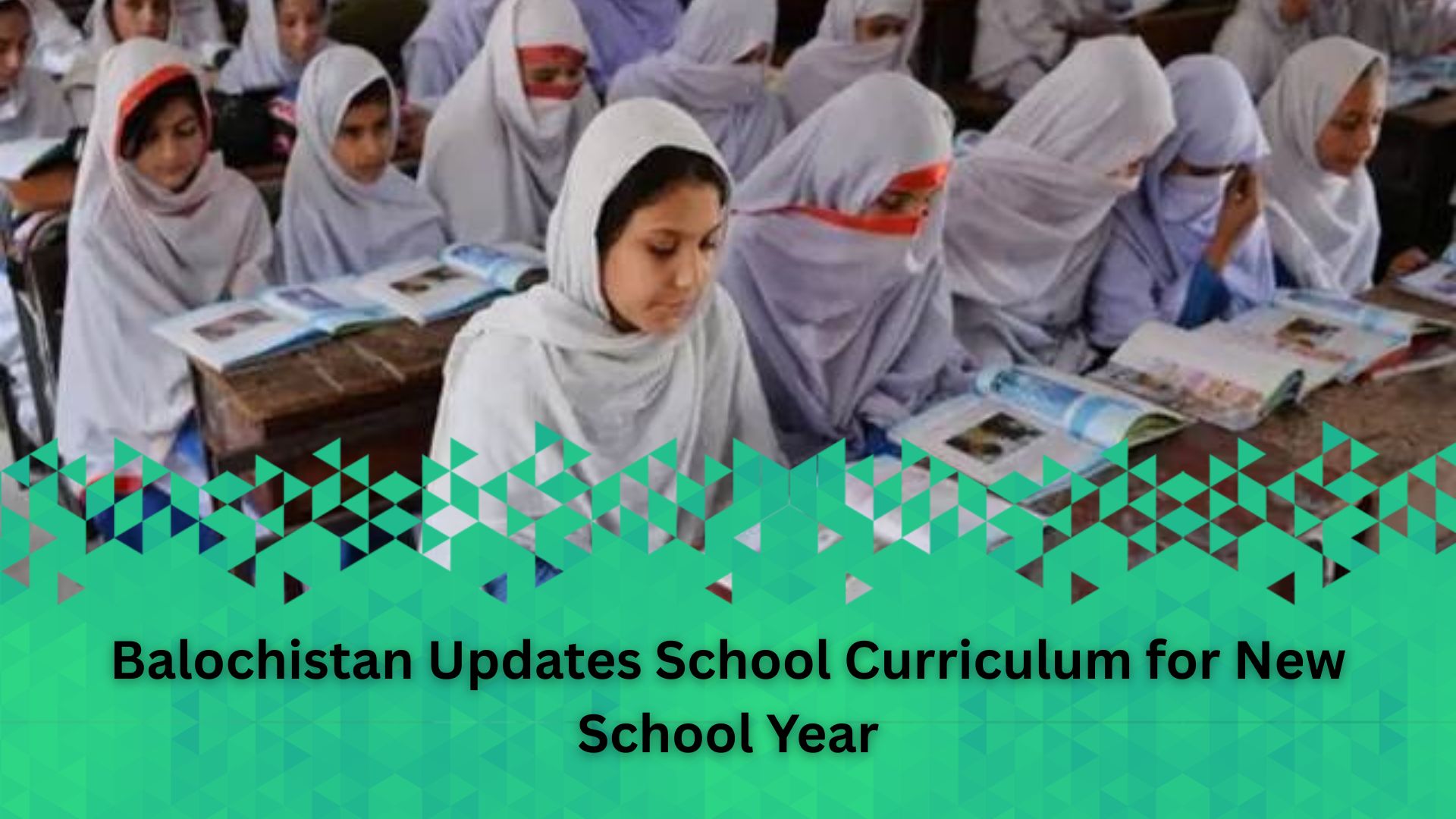
Balochistan Updates School Curriculum for New School Year
The academic landscape of Pakistan’s largest province, the Balochistan Education Department has announced a comprehensive revision of the curriculum for the upcoming academic year . The sweeping reforms, confirmed by senior officials on Tuesday, introduce three major pillars: mandatory Quran recitation and translation from Grades 1 through 12 , new computer education textbooks for middle school, and the development of first-of-their-kind textbooks aimed at promoting responsible social media use for Grades 6 to 12. You can also view 9th Class Books & 10th Class Books of all boards 2025.
The move marks one of the most significant curricular shifts in the province in recent decades, aiming to blend religious instruction, digital literacy, and modern-day civic responsibility within the public education framework. You can also view 11th Class Books & 12th Class Books of all boards 2025.
Core Reforms: A Three-Pronged Strategy
1. Integration of Quranic Studies
The most prominent change mandates the teaching of Quran recitation ( Qirat ) and translation ( Tarjuma ) as a formal part of the regular curriculum across all twelve grades. Previously, Quranic education was often offered as a separate, sometimes optional, subject or was confined to primary levels and madrassas.
“This initiative is designed to provide every student in Balochistan, regardless of their background, with a foundational understanding of the Holy Quran’s teachings and its message of peace and ethics,” stated Dr. Fouzia Zaman, Secretary of Secondary Education for Balochistan . She emphasized that the curriculum will be age-appropriate, focusing on basic recitation and simple meanings for younger children, progressing to deeper translation and contextual understanding for senior students. The subject will be included in the formal assessment system.
2. Revamping Computer Education
Recognizing the critical need for digital skills in the 21st century, the department has commissioned the development of entirely new computer education textbooks for Grades 6, 7, and 8. Officials confirmed that the books will move beyond basic theoretical knowledge to include practical, hands-on modules in coding, digital citizenship, and safe internet practices.
“Our goal is to bridge the digital divide within the province. These new books are being designed in collaboration with IT experts to ensure they are relevant, engaging, and empower our youth to be creators, not just consumers, of technology,” said Mr. Aslam Ghani, Director of Curriculum and Teacher Education .
3. Pioneering Social Media Textbooks
In a pioneering step for Pakistan’s education system, Balochistan will develop separate textbooks for students in Grades 6 to 12 focused on the “positive and responsible use of social media.” This curriculum strand aims to address growing concerns about cyberbullying, misinformation, digital privacy, and online radicalization.
“Social media is a reality for our youth. Instead of ignoring it or simply warning against its dangers, we are choosing to educate them. These textbooks will cover digital footprint management, critical thinking to identify fake news, ethical online behavior, and the laws governing digital spaces,” Dr. Zaman explained. The content is being developed with inputs from psychologists, digital rights activists, and legal experts.
Rationale and Objectives
Officials cite a multi-faceted rationale behind the simultaneous rollout of these seemingly diverse subjects. The inclusion of Quranic studies is framed as an effort to strengthen moral and ethical grounding among students. The computer and social media components are direct responses to the demands of a globalized, interconnected world and the specific challenges faced by Balochistan’s youth.
“We are not looking at education in silos. A balanced individual needs spiritual grounding, technical capability, and the social-emotional intelligence to navigate modern platforms. This curriculum aims to produce well-rounded citizens,” commented Education Minister for Balochistan, Mr. Naseebullah Marri , in a statement.
Stakeholder Reactions and Implementation Challenges
Initial reactions from various stakeholders have been mixed but largely observant.
-
Parents & Religious Scholars: Many parents and religious leaders have welcomed the mandatory Quranic studies. “This will ensure our children connect with their faith from an early age within the formal schooling system,” said Maulana Abdul Qadir, a local religious scholar. However, some have raised concerns about the capacity of existing teaching staff, traditionally trained in secular subjects, to effectively deliver the new content.
-
Educationists & Civil Society: Education experts have praised the forward-looking aspects of the digital and social media literacy drive. “The social media textbook initiative is particularly brilliant and timely. It’s a proactive approach to digital citizenship,” noted Dr. Hina Alvi, an education policy analyst based in Karachi . However, she and others point to significant implementation hurdles, including the urgent need for massive teacher training programs, provision of adequate computer lab infrastructure in remote districts, and ensuring the curriculum content remains neutral, inclusive, and of high quality.
-
Teachers’ Associations: The primary concern from teachers revolves around training and workload. “We support modernization, but the government must invest in comprehensive training workshops before rolling this out. You cannot expect a teacher of Urdu or General Science to suddenly teach proficient computer skills or nuanced social media ethics without proper support,” asserted Mr. Sadiq Baloch, President of the Balochistan Teachers Association .
The Road Ahead: Timelines and Commitments
The Education Department has formed three separate committees, comprising subject experts, textbook board officials, and practicing teachers, to oversee the development of the new textbooks. A tentative timeline suggests a phased implementation, beginning with the introduction of the new computer books and the foundational Quranic curriculum for primary grades in the next academic session. The social media curriculum may follow a year later.
Minister Marri has assured that a “substantial allocation” has been earmarked in the upcoming provincial budget for teacher training and the development of necessary digital infrastructure, particularly in rural and under-served areas of Balochistan.
A Bold Experiment in Holistic Education
Balochistan’s ambitious curricular overhaul represents a bold experiment in crafting a holistic education model that seeks to reconcile tradition with modernity. By placing Quranic literacy, computer coding, and social media ethics side-by-side, the province is attempting to address complex identity and future-readiness questions simultaneously.
The success of this sweeping reform will ultimately hinge on the quality of execution, the depth of teacher preparation, and sustained financial and political commitment. If implemented effectively, it could serve as a unique case study for other regions grappling with similar challenges. If it stumbles, it risks becoming a well-intentioned but fragmented policy. All eyes will now be on Balochistan’s classrooms as this new chapter in its educational history begins to unfold.