

 Home
Home
 National
 International
 Merit list
 Date Sheet
 Result
 Admission
 Study Abroad




41 Government Schools Stay Closed in Attock for 8 Days Amid Security Deployments
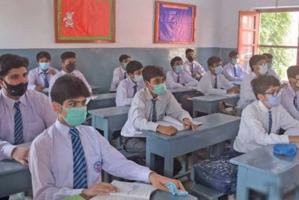
Academic activities at 41 government schools in the Attock district have remained completely suspended for eight consecutive days. Classrooms, auditoriums, and other school facilities have been repurposed as temporary accommodations and resting quarters for police and law enforcement personnel. The heavy deployment of security forces across the region is part of emergency arrangements made in anticipation of major political demonstrations and protest-related duties.
While the political landscape remains tense, the prolonged closure of these educational institutions has sparked widespread anxiety among parents, teachers, and local education authorities. With hundreds of students sitting at home during a crucial period of the academic calendar, stakeholders are raising serious questions about the recurring trend of using public schools as makeshift barracks during civil unrest.
Breakdown of Affected Tehsils Across Attock
According to data released by the district education authorities, the disruption is not isolated to a single neighborhood but spans multiple tehsils within the Attock district. The geographical distribution highlights the widespread nature of the administrative requisition:
-
Hazro Tehsil: Hardest hit by the measure, accounting for 21 boys and girls high schools.
-
Hassanabdal Tehsil: A total of nine government schools have been converted into temporary security camps.
-
Fatehjang Tehsil: At least seven educational institutions remain occupied by security forces.
-
Attock and Jand Tehsils: Two schools in each tehsil have been repurposed, bringing the total tally to 41 affected public schools.
The selection of these institutions was driven by their structural capacity to house large groups of incoming personnel and their strategic geographic locations across the district.
Massive Scale of Police Deployment
The decision to utilize public school infrastructure stems from an unprecedented mobilization of law enforcement agencies into the region. Security blueprints indicate that roughly 30,700 police personnel have been drafted into Attock to manage security operations and maintain public order.
The deployed workforce comprises various specialized units mobilized from six different districts across Punjab. These include:
-
The Elite Force: Specialized counter-terrorism and high-risk response units.
-
The Special Branch: Intelligence and threat-assessment personnel.
-
Punjab Highway Patrol Police: Traffic and regional transit control units.
Because local barracks and designated government housing could not accommodate tens of thousands of incoming officers simultaneously, district administrations turned to public infrastructure—predominantly government schools—to serve as makeshift dormitories. Cots, bedding, and field kitchens have been set up in spaces usually reserved for laboratories and lectures.
Postponed Protests and Delayed Resumption
The crisis surrounding the Attock government schools closed mandate intensified when political dynamics shifted. The Pakistan Tehreek-e-Insaf (PTI) officially postponed its heavily publicized protest march—originally scheduled for September 27—pushing the target date back to October 4.
Despite the postponement of the political march, normal life and educational operations have failed to bounce back immediately. Security forces continue to occupy the premises, awaiting further directives from provincial command structures. Consequently, the schools closed for police accommodation status remains unchanged, leaving students stranded without physical access to their classrooms.
Growing Concerns Among Parents and Educators
The ongoing hiatus has alarmed academic circles. Teachers note that the continuous loss of instructional days severely harms syllabus completion timelines, particularly for high school students preparing for board exams.
Parents have echoed these concerns, pointing out that online or alternative learning mechanisms are virtually nonexistent in public rural and semi-urban schools across Attock. Without digital infrastructure, students completely lose access to learning during these extended occupations.