
 Home
 National
 International
 Merit list
 Date Sheet
 Result
 Admission
 Study Abroad




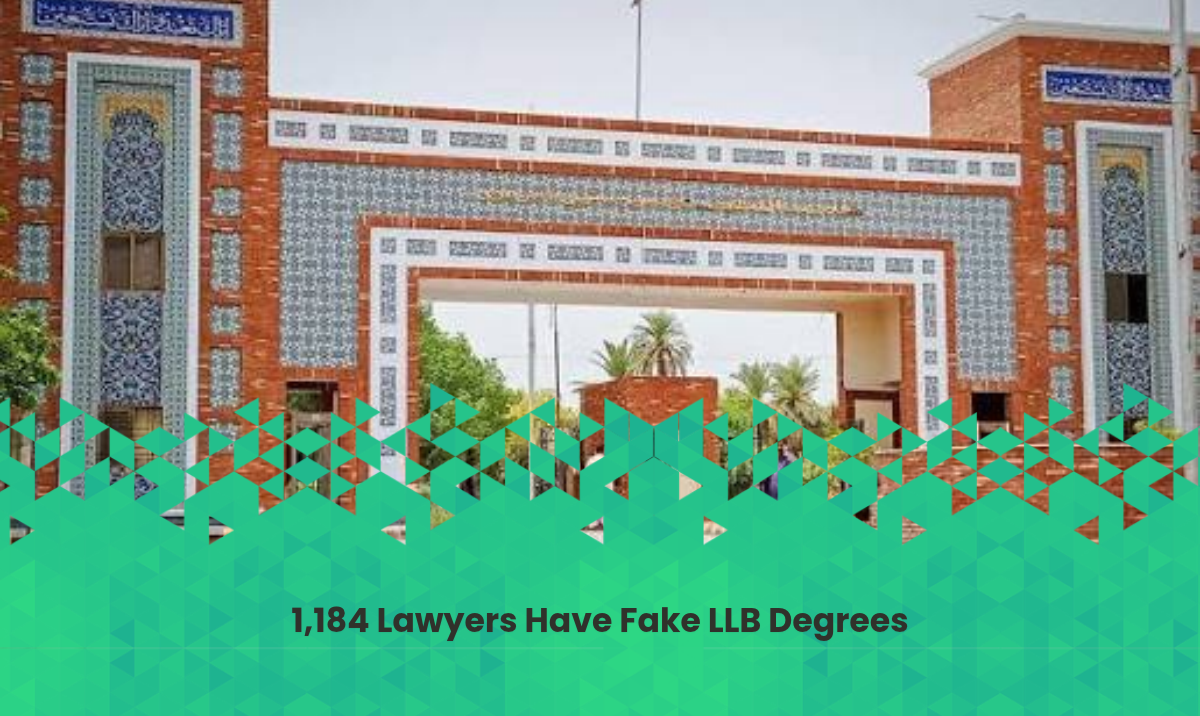
SALU Cancels 1,184 Fake LLB Degrees in Major Crackdown on Academic Fraud
In one of the largest administrative actions against fake qualifications in recent memory, Shah Abdul Latif University (SALU), Khairpur, has officially invalidated the academic records, transcripts, and degree certificates of 1,184 LLB candidates. The decision comes after an exhaustive internal inquiry confirmed that hundreds of student entries had been unlawfully inserted into the university’s official examination system without proper legal authorization.
According to an official university notification issued on October 16, 2026, the SALU fake LLB degrees scandal involves 658 candidates enrolled in the traditional three-year Bachelor of Laws programme and 526 candidates registered under the five-year integrated LLB programme.
This sweeping move underscores growing efforts across Pakistan’s higher education institutions and legal regulatory bodies to root out bogus degrees in Pakistan and restore trust in professional qualifications.
Origins of the Inquiry: Investigating Unlawful Record Manipulation
The university’s inquiry was triggered following specific resolutions adopted by the SALU Syndicate during its 92nd meeting held on April 11, 2026. Following these directives, a high-level scrutiny committee was established to conduct a granular audit of examination records across various batches.
The committee focused its investigation on two primary academic groups:
-
Three-Year LLB Programme: Examination batches corresponding to the passing years 2016, 2017, and 2018.
-
Five-Year LLB Programme: Students belonging specifically to the 2017 batch.
Investigators meticulously cross-referenced the central university database against primary records submitted by various affiliated law colleges. The audit revealed severe discrepancies, pointing to a systematic pattern where unauthorized academic entries were slipped into the official university database without valid enrollment, legal admission processing, or legitimate examination participation.
Right of Reply and Due Process Offered to Affected Candidates
To adhere to natural justice and ensure fair proceedings, the university management provided a transparent opportunity for affected individuals to defend their academic credentials.
In July 2026, SALU published a final public notice on its official website and across prominent national news outlets. The notice instructed all individuals whose records were flagged under the Shah Abdul Latif University degree scandal to submit documentary evidence within 15 days proving the legitimacy of their enrollment, marksheets, and examination appearances.
All Documents Declared 'Void Ab Initio'
Following the completion of the inquiry and verification phase, the university’s administration formally revoked all academic standings tied to the fraudulent records.
The notification explicitly states that all associated:
-
Examination results and marksheets
-
Provisional pass certificates
-
Transcript records
-
Final degree certificates
are officially declared "invalid and void ab initio" (having no legal force from the beginning). The university stressed that none of these documents will ever be recognized, verified, or attested as valid credentials issued by Shah Abdul Latif University.
Impact on Affiliated Colleges
An attached list published alongside the university notification identifies affected candidates across several regional institutions, with a heavy concentration of invalid records traced back to affiliated law colleges in Jacobabad, Kandhkot, and Kashmore.
Regulatory Bodies and Legal Sector Informed
To prevent individuals holding these invalidated credentials from practicing law or securing public office, SALU has dispatched official copies of the notification to key oversight institutions, including:
-
Higher Education Commission (HEC)
-
Pakistan Bar Council (PBC)
-
Sindh Bar Council
-
Punjab Bar Council
-
Khyber Pakhtunkhwa Bar Council
-
Balochistan Bar Council
By alerting the central and provincial bar councils, regulatory authorities can now initiate secondary reviews to identify if any of these 1,184 law degrees were previously used to secure legal practice licenses or enrollment on advocate rolls. Principals of all affiliated law colleges have also been directed to remove the named candidates from their institutional registries immediately.
A Recurring Challenge: Fake Qualifications in Pakistan
This major action is not an isolated incident at Shah Abdul Latif University. Just last year, the university took similar administrative measures, cancelling over 1,280 fake LLB degrees following an earlier audit of unverified examination entries.
Fake educational certificates have remained a persistent issue in various public and private sectors in Pakistan:
-
Federal Investigation Agency (FIA) Action: Last year, the FIA registered criminal cases against 58 Capital Development Authority (CDA) employees after an internal audit revealed they had obtained employment using forged educational documents.
-
Nationwide Degree Audits: The Higher Education Commission (HEC) has repeatedly been directed by parliamentary committees and courts to conduct widespread law degree verification in Pakistan across both public and private universities.
The legal profession, in particular, has seen increased scrutiny in recent years. The Pakistan Bar Council and provincial bar associations have increasingly tightened verification procedures to ensure that only candidates graduating from recognized institutions with legitimate degrees are permitted to represent citizens in courts of law.
What This Means for Law Education and Oversight
The action taken by SALU signals an intensified zero-tolerance policy towards academic corruption within regional higher education systems. Educational experts emphasize that continuous automated auditing, centralized database encryption, and regular external verification by the HEC will be necessary to permanently eliminate unauthorized record manipulation in university examination branches.
For candidates who lawfully completed their studies, such clean-up initiatives are seen as essential steps toward preserving the integrity and global recognition of degrees earned from public universities in Pakistan.
Key Takeaways
-
1,184 fake LLB degrees cancelled by Shah Abdul Latif University (SALU), Khairpur.
-
The invalidation affects 658 students from the 3-year programme and 526 students from the 5-year programme.
-
Affected colleges are primarily located in Jacobabad, Kandhkot, and Kashmore.
-
All degrees, transcripts, and certificates associated with these entries have been declared null and void ab initio.
-
Notifications have been sent to the HEC and all provincial Bar Councils to safeguard legal practice standards.