
 Home
 Education
 Technology
 Relationship
 History
 Business
 Career
 Religion




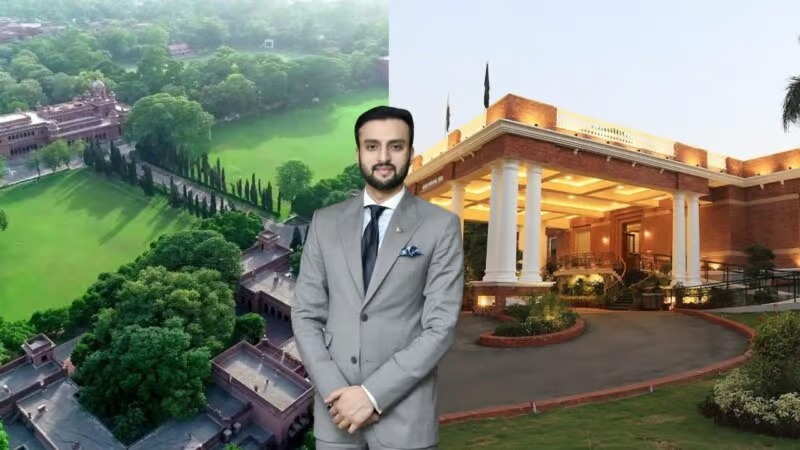
“Time to Decolonize, Former Minister Murad Proposes Landmark Rs100 Billion Reform, Relocate Gymkhana & Aitchison.”
Former Punjab Minister Ibrahim Hasan Murad calls for relocating colonial-era elite institutions to RUDA, transforming prime public land into educational, recreational and commercial assets for millions of citizens.
LAHORE, October 24, 2026: Former Punjab Minister Ibrahim Hasan Murad has called for a landmark Rs100 billion public welfare reform, proposing the relocation of Lahore Gymkhana and Aitchison College to the Ravi Urban Development Authority (RUDA) area and the transformation of their existing estates into public parks, educational institutions and revenue-generating developments.
Murad argued that Pakistan must move beyond symbolic decolonisation and confront colonial-era institutional arrangements that continue to concentrate valuable public resources in the hands of a privileged few.
“Pakistan gained independence in 1947. We now need freedom. Freedom from institutions and inherited privileges that stand in the way of the common person’s welfare, opportunity and progress,” he stated.
He maintained that decolonisation is not merely about breaking the chains of mental slavery but about transforming institutions that perpetuate social exclusion and send ordinary citizens the message that they are somehow inferior.
“The real cost is not Rs5,000 in annual rent. It is the message we send about ourselves in the comity of nations. This is apartheid in 2026,” Murad remarked.
His proposal comes amid scrutiny by a Punjab Assembly special committee of Lahore Gymkhana’s longstanding lease, under which more than 100 acres of prime government land have been occupied at an annual rent of just Rs5,000.
Lahore Gymkhana Could Become Lahore’s Central Park
Murad proposed transforming Lahore Gymkhana’s approximately 113-acre estate into a major public recreational park with an educational component occupying up to 35% of the land.
He envisioned a Central Park-style public space where children could cycle, run and play, while families and elderly citizens could enjoy greenery and recreational facilities without membership restrictions.
“Why should a few hundred privileged individuals enjoy exclusive access to vast public assets when the same land could serve millions of citizens?” he questioned.
Under his proposal, leasing 35% of the estate to educational institutions at an illustrative rate of Rs5 million per acre could generate approximately Rs200 million annually, compared with the existing token rent.
He further suggested that the selective commercialisation of valuable road-facing portions could potentially generate another Rs25 billion for public investment.
Aitchison’s 200 Acres Could Generate Rs80 Billion
Turning to Aitchison College, Murad questioned the economic and social justification for dedicating approximately 200 acres of prime urban land to an institution serving a relatively limited student population.
He proposed relocating the college to a modern, purpose-built campus in RUDA and repurposing its existing property into a massive educational park or a new Central Business and Government District.
According to his proposed model, approximately 100 acres, representing half the estate, could be commercially developed. At an assumed land value of Rs100 million per kanal, this could theoretically generate Rs80 billion.
Alternatively, he suggested establishing one of the world’s largest educational complexes for out-of-school children, potentially accommodating up to 100,000 students through purpose-built, multistorey educational infrastructure.
“The question is whether such an extraordinary public asset should serve a few thousand privileged students or become an instrument for educating hundreds of thousands of children who have never entered a classroom,” Murad said.
Rs100 Billion Could Educate Five Million Children
Murad estimated that the combined redevelopment potential of the two estates could unlock over Rs100 billion in public value, subject to independent valuation, feasibility studies and regulatory approvals.
He proposed establishing a dedicated educational endowment or public welfare fund to address Punjab’s out-of-school children crisis.
Citing affordable education models operated by The Citizens Foundation, Ghazali Education Trust, Al-Khidmat and Baithak Schools, Murad noted that an estimated annual cost of Rs20,000–30,000 per student could allow Rs100 billion to finance a year of schooling for approximately 3.3 million to five million children.
He also proposed alternative uses for the funds, including grants of Rs2–4 billion to district headquarters hospitals or university education support for approximately 150,000 young people, depending on the programme’s design and funding requirements.
“The masses are the VIPs, not those who can afford expensive memberships, hefty tuition fees or privileged admissions. Public assets must first serve ordinary Pakistanis,” he asserted.
Relocation, Not Closure: Rs10 Billion for Modern Facilities
Clarifying that the proposal does not seek to eliminate the institutions, Murad recommended relocating both Lahore Gymkhana and Aitchison College to newly developed, state-of-the-art facilities in RUDA.
He suggested a combined Rs10 billion relocation fund, which could be financed through contributions from existing club members and institutional stakeholders, supplemented by government loans or grants.
As a goodwill gesture and disturbance allowance, both institutions could also receive limited, time-bound equity participation in future redevelopment projects on their existing properties.
The proposed transition would require appropriate legal arrangements, heritage preservation, continuity of educational activities and careful urban planning.
Public Welfare Must Take Precedence Over Inherited Privileges
Murad emphasised that his proposal represents a broader call for reforming inherited institutional privileges and ensuring that valuable public assets deliver the greatest possible social and economic benefit.
He argued that institutions established during colonial rule must evolve in accordance with the needs and aspirations of a modern democratic society.
He urged the Punjab government to commission a comprehensive review of the economic, legal and public welfare implications of both properties and explore options for their relocation and redevelopment.
“We must ask ourselves what matters more: preserving exclusive privileges for a few or unlocking opportunities for millions? The purpose of government is to serve the people, not subsidise exclusivity,” he stated.
“Colonial privileges have no place in modern Pakistan. It is time to decolonise our institutions, democratise access to public resources and take decisions in the best interest of Pakistan and its people,” Murad concluded.