




 Home
Home
 Education
 Technology
 Relationship
 History
 Business
 Career
 Religion


.jpg)
Most and Least Literate Provinces of Pakistan Revealed: Inside the Economic Survey
The definitive roadmap of the educational landscape of Pakistan has emerged. With the official launch of the Pakistan Economic Survey 2025-26 on Thursday, June 11, 2026, the federal government has unveiled comprehensive regional data on learning outcomes. Drawn from the landmark 2025 Population and Housing Census, these fresh figures show exactly where the country stands on education.
While the national score shows gradual progress, the data explicitly proves that education outcomes remain uneven across Pakistan. From massive infrastructure disparities to deep urban-rural divides, the survey highlights why a blanket approach to schooling no longer works and outlines a critical path forward for region-specific education policies.
The Provincial Standings: Who Leads and Who Lags?
According to the freshly released document, the overall literacy rate in Pakistan for individuals aged 10 and above has improved modestly to 63%. However, the internal numbers tell a highly fragmented story.
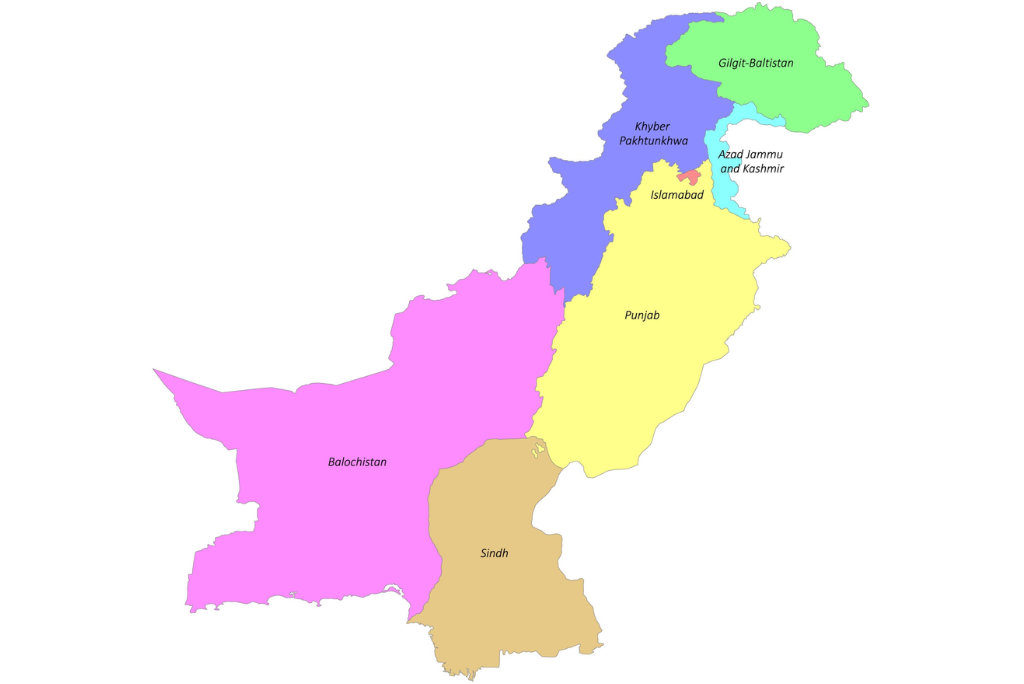
Punjab secured the top position, recording the highest literacy rate in the country at 68%. The province has successfully leveraged its dense school network and structural reforms to sustain its lead. Following Punjab, a tie emerged in the middle tier: both Sindh and Khyber Pakhtunkhwa (KPK) recorded a literacy rate of 58.0% each. While KPK has seen localized boosts in youth enrollment, structural bottlenecks in rural Sindh continue to cap its overall average.
At the bottom of the spectrum lies Balochistan, recording the lowest literacy rate at 49.0%. It is the only province where less than half of the population meets the basic threshold of literacy.
Breaking Down the Numbers: A Comparative Overview
To understand how skewed the educational achievements are, we have to look closely at the provincial numbers alongside the severe urban-rural gaps highlighting the education sector in Pakistan.
| Province / Region | Overall Literacy Rate | Primary Key Challenge |
| Punjab | 68.0% | Managing urban-rural quality gaps |
| Sindh | 58.0% | Deep rural female illiteracy (falling to 39%) |
| Khyber Pakhtunkhwa (KPK) | 58.0% | Rebuilding infrastructure in merged districts |
| Balochistan | 49.0% | Severe teacher shortages & extreme distances |
| Urban Pakistan (National) | 74.0% | Absorbing the low-income migrant population |
| Rural Pakistan (National) | 55.0% | Overcoming the missing school facilities crisis |
Why Balochistan is Trapped Behind
Balochistan’s lower literacy rate is not an overnight failure; it is the direct consequence of long-standing challenges that have starved the province of equitable development. Analysts reviewing the census data point to four systemic barriers:
-
Extreme Distance from Schools: Balochistan is Pakistan's largest province by landmass but the smallest by population density. Children in remote settlements frequently face multi-kilometer walks through harsh terrain just to reach the nearest primary school.
-
Weak Infrastructure and Missing Facilities: The survey highlights a catastrophic lack of basic resources. Nationally, 65% of schools have electricity, but Balochistan lags drastically behind. Worse, only 23% of primary schools in Balochistan have functional clean drinking water and basic toilet facilities.
-
Severe Shortage of Teachers: Recruiting and retaining qualified educators in remote regions remains a major failure. Absenteeism is high, and a lack of incentive packages means rural schools are routinely left empty.
-
Pervasive Household Poverty: For many impoverished families in the province, the opportunity cost of sending a child to school is too high. Children are frequently pulled into agricultural labor or livestock herding to supplement household survival.
The Macro Paradox: Rising Literacy vs. Falling Budgets
While the Pakistan Economic Survey 2025-26 shows a 2% uptick in national literacy (moving from 61% to 63%), it exposes a troubling structural paradox: public financial commitment to schooling is shrinking.
Total public expenditure on the education sector in Pakistan fell to Rs962 billion for the fiscal year, a massive drop from Rs1,251 billion in the prior period. Education spending has steadily withered away, dropping from 1.7% of GDP a few years ago down to a mere 0.8% of GDP in the 2025-2026 economic window.




Share your comments & questions here
No comments yet. Be the first to comment!